The Workload and Role Clarity Workbook
Identifying Operational Strain Before It Becomes Institutional Risk
The Workload and Role Clarity Workbook is a practical professional development resource that helps higher education leaders identify excessive workloads, unclear responsibilities, and operational inefficiencies before they become institutional risks. Through guided exercises, self-assessments, and real-world scenarios, readers explore how workload distribution and role clarity influence employee satisfaction, engagement, institutional effectiveness, and long-term organizational stability.
Available in Paperback
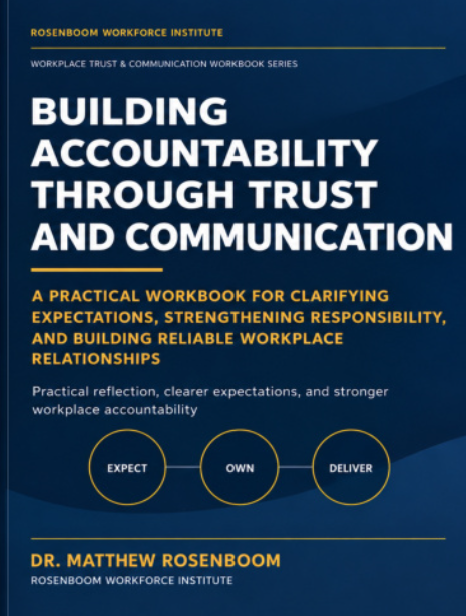
Building Accountability Through Trust and Communication
A Practical Workbook for Clarifying Expectations, Strengthening Responsibility, and Building Reliable Workplace Relationships
Building Accountability Through Trust and Communication is a practical professional development workbook that helps employees, supervisors, and organizational leaders strengthen accountability through clear expectations, effective communication, trust, and shared responsibility. Through 12 instructional chapters featuring realistic workplace scenarios, guided exercises, and practical activities, readers explore how to encourage personal ownership, improve teamwork, address missed commitments constructively, and build healthier workplace relationships that support long-term organizational effectiveness.
Available in Paperback
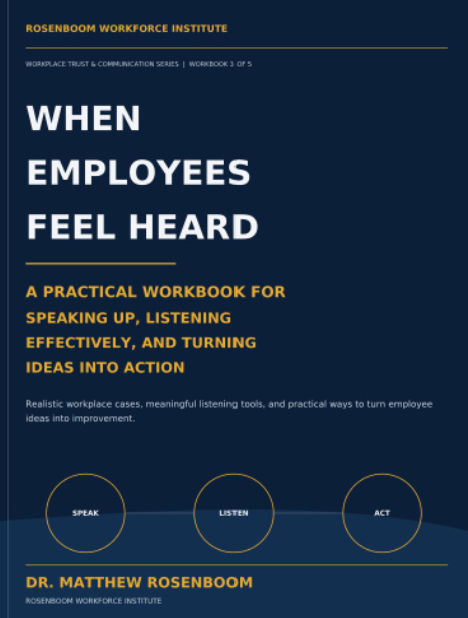
When Employees Feel Heard
A Practical Workbook for Speaking Up, Listening Effectively, and Turning Ideas Into Action
When Employees Feel Heard is a practical professional development workbook that helps employees, supervisors, and organizational leaders strengthen workplace communication, active listening, and employee voice. Through 12 learning modules featuring realistic scenarios, guided exercises, and practical activities, readers explore how to overcome communication barriers, build psychological safety, express concerns constructively, and turn employee ideas into actionable recommendations that foster trust, engagement, and long-term organizational improvement.
Available in Paperback
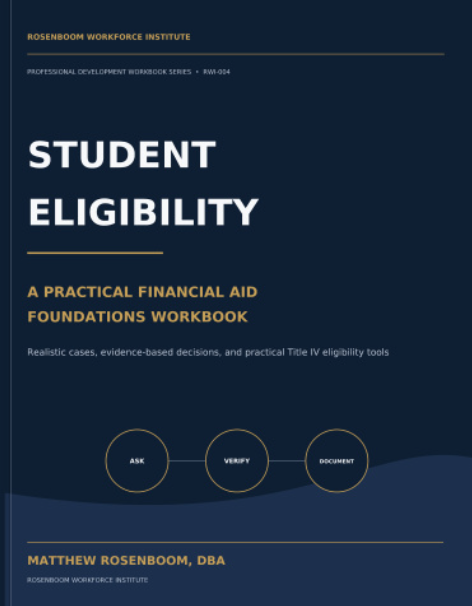
Student Eligibility: A Practical Financial Aid Foundations Workbook
A Practical Financial Aid Foundations Workbook
Student Eligibility: A Practical Financial Aid Foundations Workbook is a comprehensive professional development resource designed to help financial aid professionals understand and apply federal Title IV student eligibility requirements. Through 12 instructional modules, 24 realistic student scenarios, guided exercises, and practical decision-making tools, readers explore citizenship requirements, enrollment eligibility, satisfactory academic progress, federal aid history, conflicting information, and documentation standards. This workbook bridges the gap between regulatory knowledge and real-world financial aid administration, strengthening compliance, accuracy, and professional confidence.
Available in Paperback
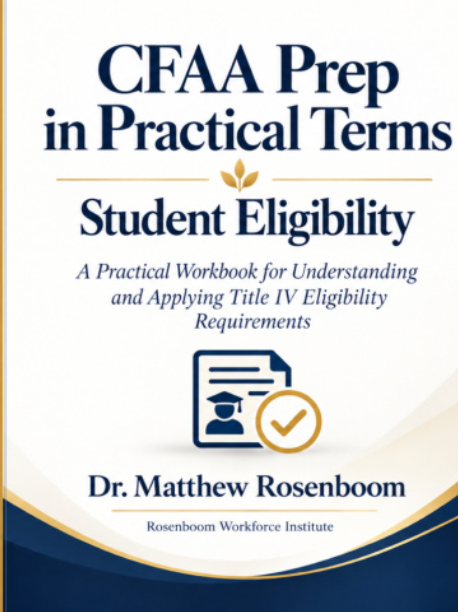
CFAA Prep in Practical Terms: Student Eligibility
A Practical Workbook for Understanding and Applying Title IV Eligibility Requirements
CFAA Prep in Practical Terms: Student Eligibility is an interactive professional development workbook designed to help financial aid professionals strengthen their understanding and practical application of federal Title IV student eligibility requirements. Through 12 learning modules, realistic scenarios, guided exercises, and knowledge checks, readers develop skills in evaluating eligibility, resolving conflicting information, documenting decisions, and maintaining regulatory compliance. Designed to support CFAA examination preparation and ongoing professional development, this independently published workbook is not affiliated with or endorsed by NASFAA.
Available in Paperback
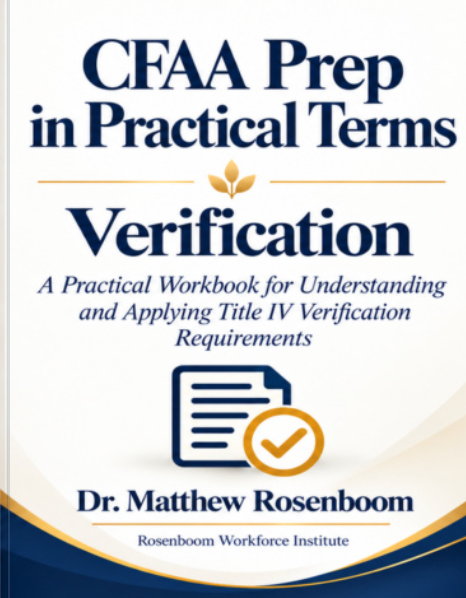
CFAA Prep in Practical Terms: Verification
A Practical Workbook for Understanding and Applying Title IV Verification Requirements
CFAA Prep in Practical Terms: Verification is an interactive professional development workbook designed to help financial aid professionals understand and apply federal Title IV verification requirements. Through realistic case studies, guided exercises, knowledge checks, and detailed explanations, readers strengthen their skills in reviewing documentation, resolving conflicting information, processing FAFSA corrections, and maintaining regulatory compliance. Designed for CFAA examination preparation and ongoing professional development, this workbook emphasizes practical decision-making and the effective use of authoritative federal student aid guidance. Independently published and not affiliated with or endorsed by NASFAA.
Available in Paperback
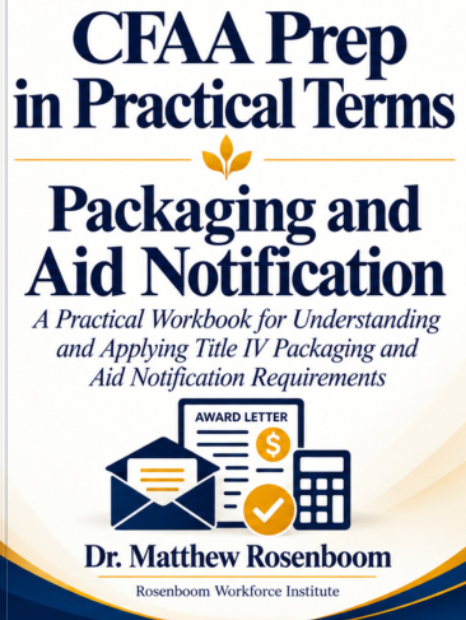
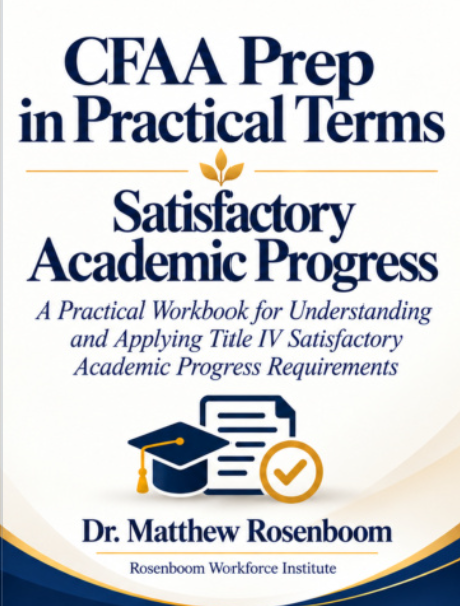
CFAA in Practical Terms: Satisfactory Academic Progress
A Practical Workbook for Understanding and Applying Title IV Satisfactory Academic Progress
CFAA Prep in Practical Terms: Satisfactory Academic Progress is a 135-page interactive professional development workbook designed to help financial aid administrators understand and apply federal Title IV SAP requirements.
Drawing on Dr. Matthew Rosenboom's more than 25 years of financial aid experience, the workbook covers GPA, pace of completion, maximum timeframe, financial aid warning and probation, appeals, academic plans, and institutional compliance. Through realistic case studies, practical exercises, and detailed answer explanations, readers strengthen their ability to interpret regulations, evaluate student eligibility, and make consistent, defensible decisions.
The workbook emphasizes the Federal Student Aid Knowledge Center and FSA Handbook as essential daily resources and supports both professional development and independent CFAA examination preparation.
Independently developed; not affiliated with or endorsed by NASFAA.
Available in Paperback
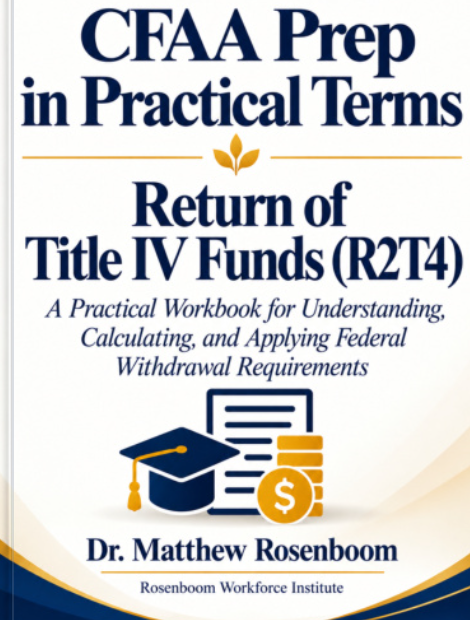
CFAA PREP IN PRACTICAL TERMS RETURN OF TITLE IV FUNDS (R2T4)
A Practical Workbook for Understanding, Calculating, and Applying Federal Withdrawal Requirements
CFAA Prep in Practical Terms: Return of Title IV Funds (R2T4) is a 169-page interactive professional development workbook designed to help financial aid professionals understand and apply federal student aid withdrawal requirements.
Drawing on more than 25 years of Title IV experience, Dr. Matthew Rosenboom combines regulatory guidance with practical examples covering withdrawal determinations, exemptions, attendance documentation, R2T4 calculations, institutional responsibilities, post-withdrawal disbursements, and compliance deadlines.
Through 12 instructional modules, realistic scenarios, calculation exercises, and documentation tools, readers develop practical skills and strengthen professional judgment while learning to adapt operational approaches to their institutions.
Part of the 12-volume CFAA Prep in Practical Terms series, the workbook emphasizes critical thinking, regulatory accuracy, and effective student service.
The Rosenboom Workforce Institute is also exploring self-paced online training, with proposed individual access at $149 annually and departmental subscriptions at $4,500 annually. Online programs aren’t available yet; printed workbooks are sold separately.
Learn more at rosenboomtaxandadvisory.net.
An independent educational publication.
Available in Paperback
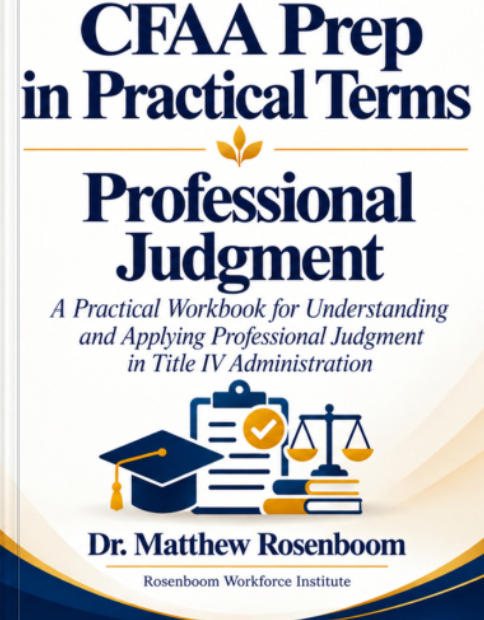
CFAA PREP IN PRACTICAL TERMS PROFESSIONAL JUDGMENT
A Practical Workbook for Evaluating Special Circumstances, Dependency Determinations, and Documented Title IV Decisions
CFAA Prep in Practical Terms: Professional Judgment is a 181-page interactive workbook designed to help financial aid professionals confidently evaluate, document, and apply professional judgment within federal Title IV requirements.
Written by Dr. Matthew Rosenboom, with more than 25 years of financial aid experience, the workbook covers special circumstances, income adjustments, dependency overrides, homelessness, cost of attendance adjustments, documentation, and individualized decision-making.
Featuring 12 chapters, 48 practical case exercises, guided solutions, worksheets, and professional development plans, the workbook emphasizes real-world application while encouraging institutions to adapt appropriate practices to their operations.
Part of the 12-volume CFAA Prep in Practical Terms series, the workbook promotes practical, compliant, student-centered financial aid administration.
Rosenboom Workforce Institute is also exploring future online training options, including individual subscriptions at $149 annually per topic and institutional departmental subscriptions at $4,500 annually. Online training is not yet available; printed workbooks are sold separately.
Available in Paerback
CFAA Prep in Practical Terms: Packaging and Aid Notification
A practical workbook for understanding and appyling Title IV packaging and aid notification requirements
Accurate financial aid packaging is about more than calculating awards. It is about helping students understand their financial assistance, make informed decisions, and prepare for their educational expenses. CFAA Prep in Practical Terms: Packaging and Aid Notification is a 204-page interactive professional development workbook designed to help financial aid professionals strengthen their understanding and practical application of Title IV packaging and student aid notification requirements. Written by Dr. Matthew Rosenboom, a higher education administrator with more than 25 years of Title IV experience, this workbook connects federal regulations with realistic situations encountered in financial aid offices. Inside this workbook, readers will explore: Understanding the Student Aid Index (SAI), financial need, and cost of attendance. Packaging Federal Pell Grants, Direct Loans, scholarships, and other assistance. Reviewing annual and aggregate borrowing limits. Managing overawards, enrollment changes, and repackaging. Preparing accurate, understandable financial aid offers. Communicating estimated assistance, actual charges, and student financial obligations. Documenting packaging decisions and reviewing cases for accuracy. Through 12 instructional modules, calculation exercises, realistic student scenarios, guided solutions, documentation worksheets, and practical case studies, readers can strengthen their knowledge and build confidence in financial aid decision-making. Learning Through Practical Experience This workbook emphasizes practical application rather than simply memorizing regulations. Readers are encouraged to evaluate examples, adapt appropriate operational approaches to their institutions, and distinguish mandatory federal requirements from flexible institutional practices. Each workday should begin by consulting the current Federal Student Aid Handbook and FSA Knowledge Center for applicable regulations and updates. Exploring Online Professional Development The Rosenboom Workforce Institute is considering online instructional programs based on its growing workbook library. Proposed options include individual online training for one selected topic at $149 annually and institutional departmental subscriptions at $4,500 annually for unlimited participation within one department. Online programs are not yet available. Printed workbooks are sold separately.
Available in Paperback
Books and Professional Development
VA Education Benefits
What to Ask, What to Collect, and When to Refer
This practical workbook helps financial aid professionals navigate VA education benefits with greater confidence. Through realistic scenarios, guided exercises, and practical explanations, readers will better understand how to advise student veterans and beneficiaries while recognizing when additional verification or referral is needed.
Available in Paperback
Building Trust Between Employees and Supervisors
A Practical Workbook for Strengthening Relationships and Creating a Healthier Workplace
Building Trust Between Employees and Supervisors is a practical professional development workbook that strengthens workplace relationships through better communication, fairness, accountability, and mutual understanding. Through realistic scenarios, guided exercises, and self-reflection, readers explore how trust develops, what undermines it, and how to restore strained relationships. The workbook also empowers employees and supervisors to identify concerns, develop constructive solutions, and present actionable recommendations to leadership, promoting healthier workplace relationships and greater organizational stability.
Available in Paperback
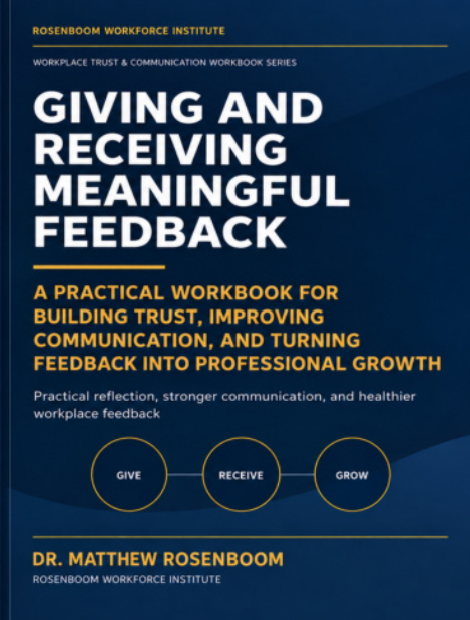
Giving and Receiving Meaningful Feedback
A Practical Workbook for Building Trust, Improving Communication, and Turning Feedback Into Professional Growth
Giving and Receiving Meaningful Feedback is a practical professional development workbook that helps employees, supervisors, and organizational leaders strengthen workplace communication, trust, and accountability. Through 12 instructional modules with realistic scenarios, guided reflection, and applied exercises, readers learn to deliver constructive feedback, receive it without defensiveness, recognize accomplishments, and turn meaningful conversations into actionable improvements that strengthen workplace relationships and long-term organizational effectiveness.
Available in Paperback
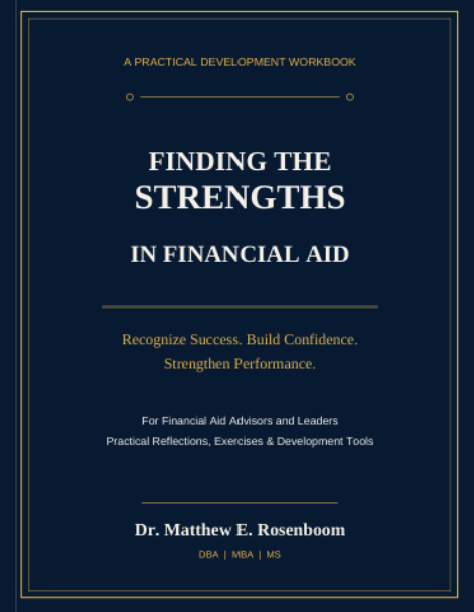
Finding the Strengths in Financial Aid
An Interactive Workbook for Advisors and Leaders to Recognize Success, Build Confidence, and Strengthen Performance
Finding the Strengths in Financial Aid is a practical professional development workbook designed to help financial aid professionals and institutional leaders recognize, develop, and build upon existing employee and departmental strengths. Through realistic financial aid scenarios, guided reflection, and applied exercises, readers explore how strengths-based approaches can improve professional confidence, student service, regulatory compliance, teamwork, and operational effectiveness while encouraging employee recognition, engagement, and continuous professional growth.
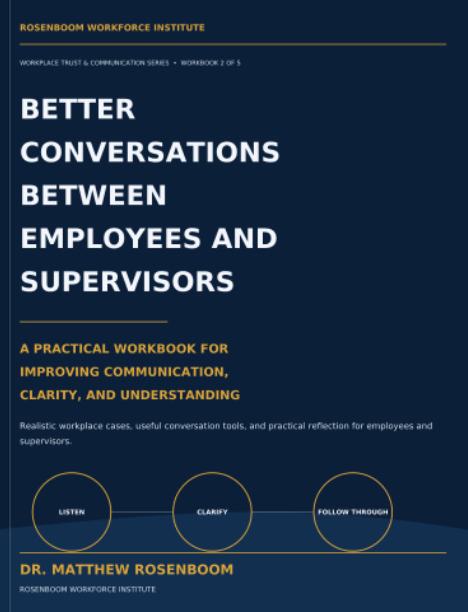
Better Conversations Between Employees and Supervisors
A Practical Workbook for Improving Communication, Clarity, and Understanding
Better Conversations Between Employees and Supervisors is a practical professional development workbook that strengthens workplace communication, trust, and mutual understanding. Through realistic scenarios, guided exercises, and model conversations, readers explore how to clarify expectations, navigate difficult discussions, address misunderstandings, and improve collaboration. The workbook empowers employees and supervisors to communicate more effectively, develop constructive solutions, and turn everyday conversations into meaningful improvements that support healthier workplace relationships and organizational effectiveness.
Available in Paperback
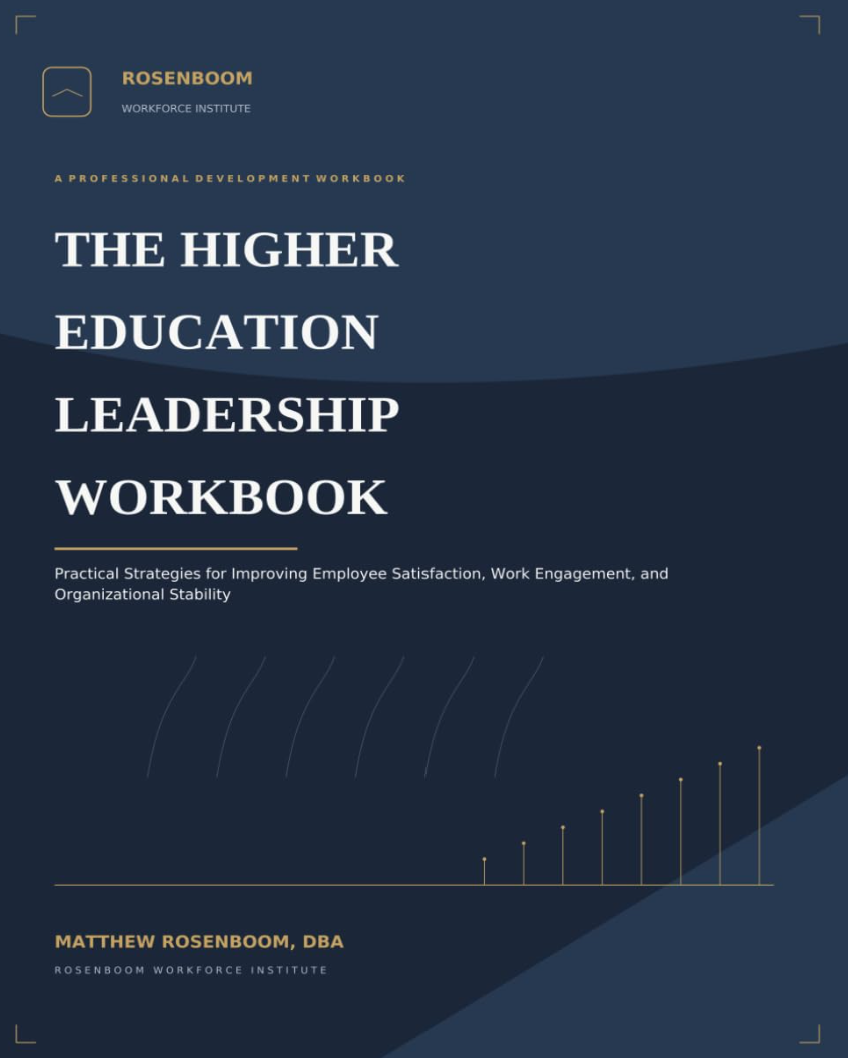
The Higher Education Leadership Workbook: Practical Strategies for Improving Employee Satisfaction, Work Engagement, and Organizational Stability
The Higher Education Leadership Workbook is a practical professional development resource designed to help higher education supervisors and department directors strengthen employee satisfaction, work engagement, and organizational stability. Through 12 research-informed chapters featuring realistic workplace scenarios, guided reflection, and applied leadership exercises, readers explore strategies to improve communication, manage workloads, build trust, encourage employee retention, and strengthen departmental collaboration. This workbook bridges organizational research and everyday leadership practices to support healthier, more effective higher education institutions.
Available in Paperback
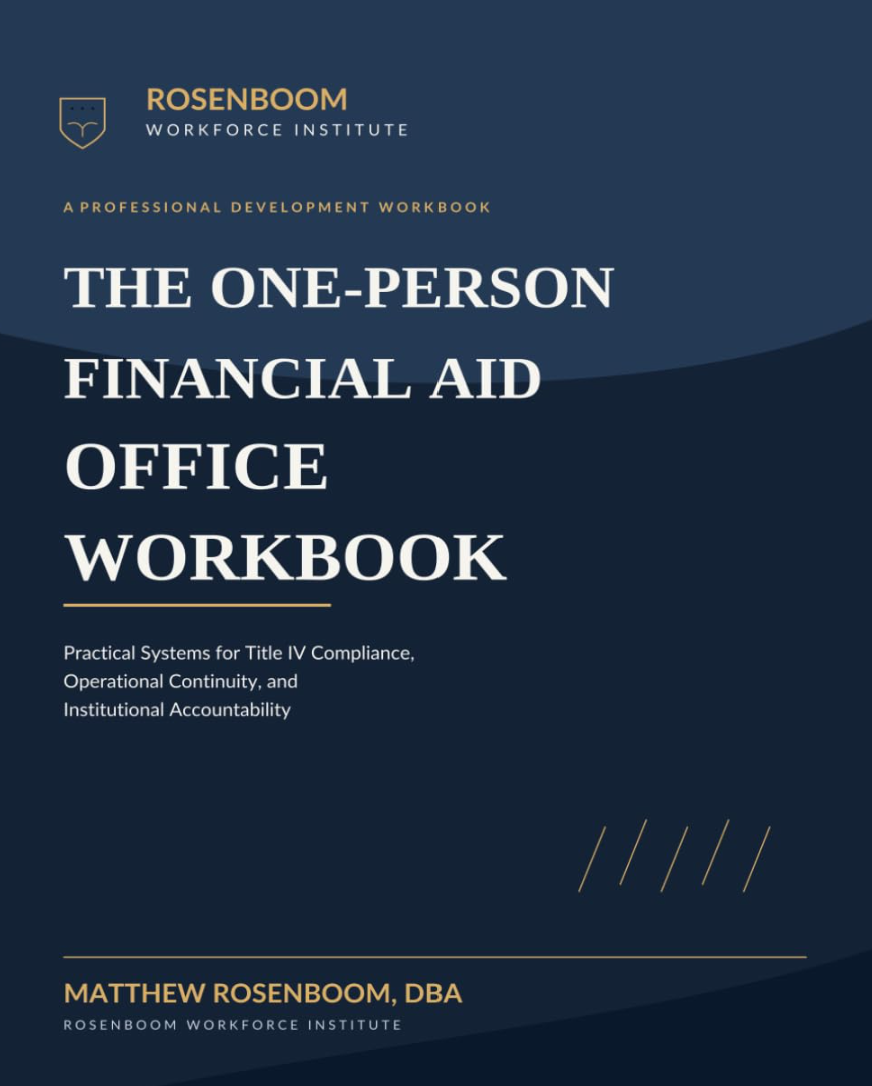
The One-Person Financial Aid Office Workbook: Practical Systems for Title IV Compliance, Operational Continuity, and Institutional Accountability
The One-Person Financial Aid Office Workbook is a practical professional development resource designed to help financial aid professionals manage Title IV compliance, competing responsibilities, and operational challenges with limited staffing. Through 12 instructional chapters with realistic scenarios, guided exercises, and reusable tools, readers explore strategies to strengthen eligibility reviews, disbursements, reconciliation, R2T4, SAP, interdepartmental coordination, and regulatory reporting. This workbook provides practical approaches to improving efficiency, institutional accountability, and operational continuity in small or understaffed financial aid offices.
Available in Paperback
The New Financial Aid Director Workbook: A Practical Guide to the First 90 Days
The New Financial Aid Director Workbook is a practical professional development resource that helps newly appointed financial aid directors and managers navigate their first 90 days with confidence. Through 12 instructional chapters, realistic leadership scenarios, guided exercises, and 18 reusable templates, readers explore strategies for assessing Title IV compliance, evaluating office operations, strengthening internal controls, building institutional relationships, and establishing effective financial aid processes. The workbook provides a structured 10-, 30-, 60-, and 90-day planning framework to support informed leadership decisions, regulatory compliance, and long-term operational effectiveness.
Available in Paperback
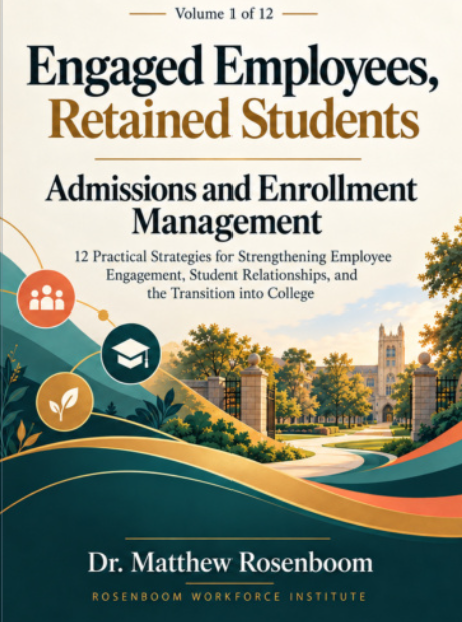
Admissions and Enrollment Management
Twelve practical strategies to strengthen employee engagement, student relationships, and the transition to college.
Engaged Employees, Retained Students: Admissions and Enrollment Management is an interactive professional development workbook designed to help admissions professionals strengthen employee engagement, build meaningful student relationships, and support enrollment and retention. Across 12 chapters with realistic scenarios, guided exercises, and practical action plans, readers explore strategies to improve communication, teamwork, employee recognition, and the student experience. Part of the 12-volume Engaged Employees, Retained Students series, this workbook emphasizes how supported, valued, and engaged employees contribute to student success and institutional effectiveness.
Available in Paperback
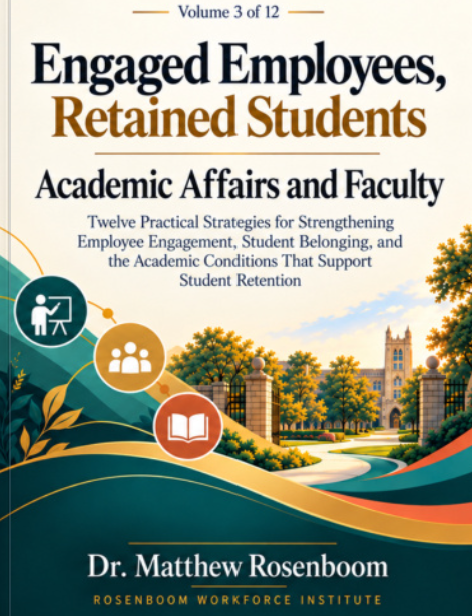
Engaged Employees Retained Students Financial Aid
Twelve Practical Strategies for Strengthening Employee Engagement, Student Confidence, and the Conditions That Support Student Retention
Engaged Employees, Retained Students: Financial Aid is an interactive professional development workbook designed to help financial aid professionals strengthen employee engagement, build student confidence, and support student retention. Through 12 chapters featuring realistic scenarios, guided exercises, and practical action plans, readers explore strategies for improving student communication, financial aid counseling, teamwork, employee recognition, and positive leadership. Part of the 12-volume Engaged Employees, Retained Students series, this workbook highlights how valued, supported, and engaged financial aid employees contribute to student success and institutional effectiveness.
Available in Paperback
Engaged Employees Retained Students Academic Affairs and Faculty
Twelve Practical Strategies for Strengthening Employee Engagement, Student Belonging, and the Academic Conditions That Support Student Retention
Engaged Employees, Retained Students: Academic Affairs and Faculty is an interactive professional development workbook designed to help faculty and academic leaders strengthen employee engagement, student belonging, and academic success. Across 12 chapters featuring realistic scenarios, guided exercises, and practical action plans, readers explore strategies to create supportive learning environments, improve student feedback, encourage academic persistence, strengthen departmental collaboration, and recognize faculty contributions. Part of the 12-volume Engaged Employees, Retained Students series, this workbook emphasizes how valued, supported, and engaged faculty contribute to student retention and institutional effectiveness.
Available in Paperback
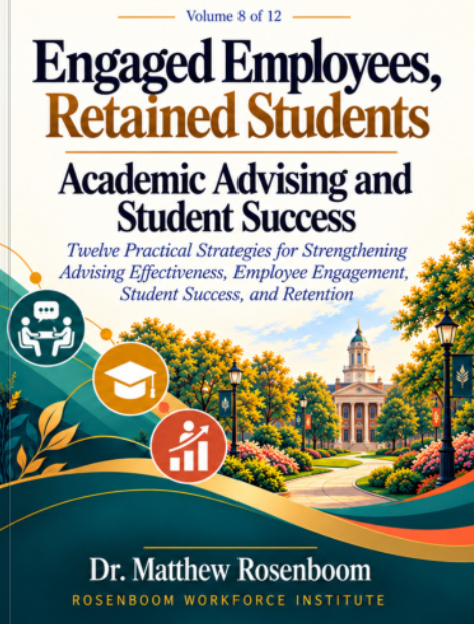
ENGAGED EMPLOYEES, RETAINED STUDENTS: Academic Advising and Student Success
Twelve Practical Strategies for Strengthening Employee Engagement, Academic Guidance, Student Belonging, and Student Persistence
Academic advisors help students turn educational goals into achievable plans. Supporting those advisors is an important part of strengthening student success and retention. Engaged Employees, Retained Students: Academic Advising and Student Success is a 222-page interactive professional development workbook examining how employee engagement, effective academic guidance, student belonging, and cross-department collaboration contribute to student persistence. Written by Dr. Matthew Rosenboom, a higher education administrator with more than 25 years of experience, this workbook connects organizational research with practical approaches to academic advising and student support. Inside this workbook, readers will explore: Strengthening employee engagement and professional development among academic advisors. Building meaningful advising relationships that support student belonging. Helping students develop realistic academic plans and educational goals. Identifying opportunities for early intervention and proactive support. Clarifying the responsibilities of advisors, Financial Aid, the Registrar, and academic leadership. Understanding how satisfactory academic progress and academic policies intersect with advising. Improving information sharing, referrals, and departmental coordination. Creating supportive, student-centered advising environments. Across 12 chapters and 96 fictional scenarios, readers encounter case-specific discussions, guided reflection, practical exercises, and opportunities for departmental improvement. A Positive, Practical Approach This workbook emphasizes what institutions can accomplish when advisors have the information, support, and clearly defined responsibilities needed to serve students effectively. Rather than prescribing one model of academic advising, it encourages readers to examine their existing strengths, adapt appropriate practices, and develop solutions that reflect their institutional environments. Exploring Online Professional Development The Rosenboom Workforce Institute is considering self-paced online professional development programs based on its workbook library. Proposed options include individual access to training for one selected topic at $149 annually and institutional subscriptions at $4,500 annually for unlimited employees within a single department. These online programs are not yet available. Printed workbooks are sold separately.
Available in Paperback
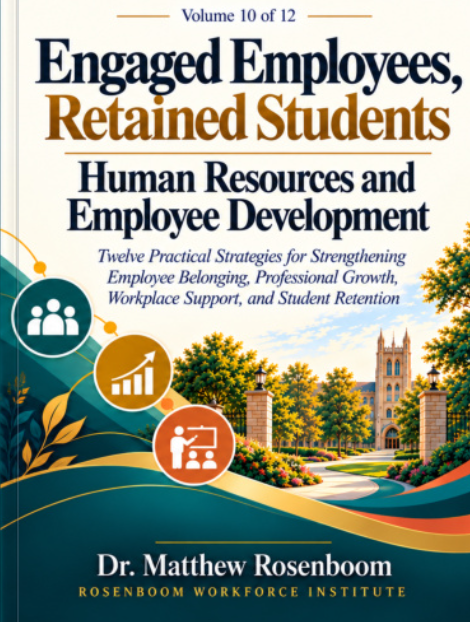
Engaged Employees, Retained Students: Human Resources and Employee Development
Twelve Practical STwelve Strategies for Strengthening Employee Belonging, Professional Growth, Workplace Support, and Student Retention
Engaged Employees, Retained Students: Human Resources and Employee Development explores how effective HR practices, supportive leadership, employee recognition, and professional development contribute to stronger institutions and student retention. Through practical scenarios, exercises, and action plans, the workbook helps higher education professionals strengthen employee engagement, workplace trust, and organizational effectiveness.
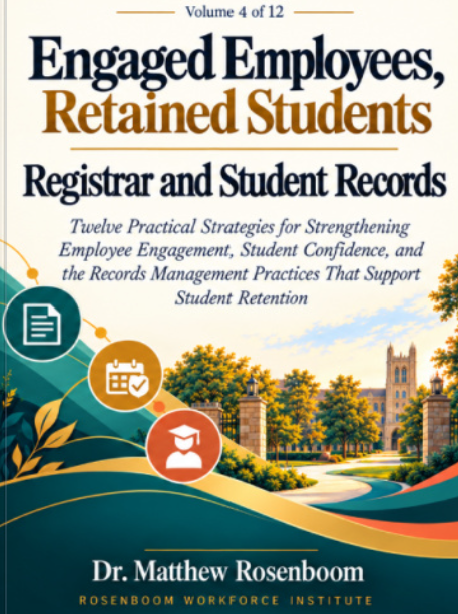
Engaged Employees, Retained Students: Registrar and Student Records
Twelve Practical Strategies for Strengthening Employee Engagement, Student Confidence, and the Records Management Practices That Support Student Retention
Behind every accurate academic record is an employee helping a student move one step closer to graduation. Engaged Employees, Retained Students: Registrar and Student Records is a 254-page interactive professional development workbook exploring how employee engagement strengthens student confidence, records accuracy, institutional collaboration, and the conditions that support student retention. Written by Dr. Matthew Rosenboom, a higher education administrator, researcher, and founder of the Rosenboom Workforce Institute, this workbook connects organizational research with practical approaches to supporting registrar professionals and the students they serve. Inside this workbook, readers will explore: Strengthening employee engagement and positive workplace relationships. Building student confidence through accurate, timely records services. Supporting registration, scheduling, and academic progress. Improving communication during enrollment changes and academic transitions. Encouraging collaboration with Academic Affairs, Financial Aid, and Student Services. Supporting employees through recognition, leadership, and professional development. Developing practices that strengthen graduation readiness and student persistence. Through 12 chapters, 96 applied student scenarios, coached analyses, reflection exercises, departmental activities, and practical action-planning tools, readers can build upon existing strengths and explore opportunities for continued improvement. A Practical, Collaborative Approach This workbook does not suggest that every institution must operate identically. Instead, it shares practical examples and experiences that registrar professionals can evaluate, adapt, and discuss within their own institutional environments while respecting applicable regulatory requirements. Exploring Online Professional Development The Rosenboom Workforce Institute is considering online professional development programs based on its growing workbook library. Proposed options include individual online training for one selected topic at $149 annually and institutional departmental subscriptions at $4,500 annually for unlimited employee participation within one department. Online programs are not yet available. Printed workbooks are sold separately. Learn more or express interest at rosenboomtaxandadvisory.net.
Available in Paperback
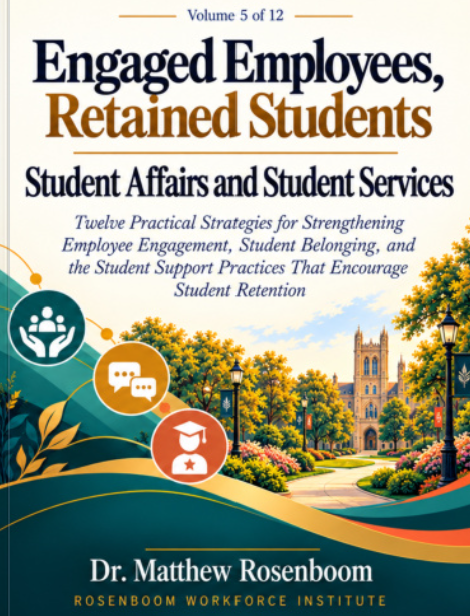
ENGAGED EMPLOYEES, RETAINED STUDENTS: Student Affairs and Student Services
Twelve Practical Strategies for Strengthening Employee Engagement, Student Belonging, and the Support Services That Encourage Student Retention
When Student Affairs professionals feel valued, supported, and engaged, they are better positioned to create the experiences that help students feel connected, supported, and motivated to continue their education. Engaged Employees, Retained Students: Student Affairs and Student Services is a 228-page interactive professional development workbook exploring how employee engagement strengthens student belonging, supportive campus environments, student experiences, and the conditions that encourage student retention. Written by Dr. Matthew Rosenboom, a higher education administrator, researcher, and founder of the Rosenboom Workforce Institute, this workbook connects organizational research with practical approaches that Student Affairs professionals can apply in their own institutions. Inside this workbook, readers will explore: Strengthening employee engagement and student belonging. Creating positive orientation and student transition experiences. Supporting student well-being, accessibility, and basic needs. Encouraging student involvement and campus connections. Improving communication, outreach, and student relationships. Strengthening collaboration between Student Affairs and other departments. Supporting employees through recognition, leadership, and professional development. Developing approaches that encourage student persistence and retention. Through 12 chapters, 144 practical scenarios, coached analyses, reflection exercises, departmental activities, and 30-, 60-, and 90-day action plans, readers can build upon existing strengths and identify opportunities for continued improvement. A Positive, Practical Approach Rather than focusing on institutional shortcomings, this workbook celebrates what Student Affairs teams can accomplish when employees feel supported and empowered. Readers are encouraged to evaluate the examples, adapt appropriate practices, and share what works within their own institutions. Exploring Online Professional Development The Rosenboom Workforce Institute is considering online instructional programs based on its growing workbook library. Proposed options include individual online training for one selected topic at $149 annually and institutional departmental subscriptions at $4,500 annually for unlimited employee participation within one department. Online programs are not yet available. Printed workbooks are purchased separately. Learn more or express interest at rosenboomtaxandadvisory.net.
Available in Paperback
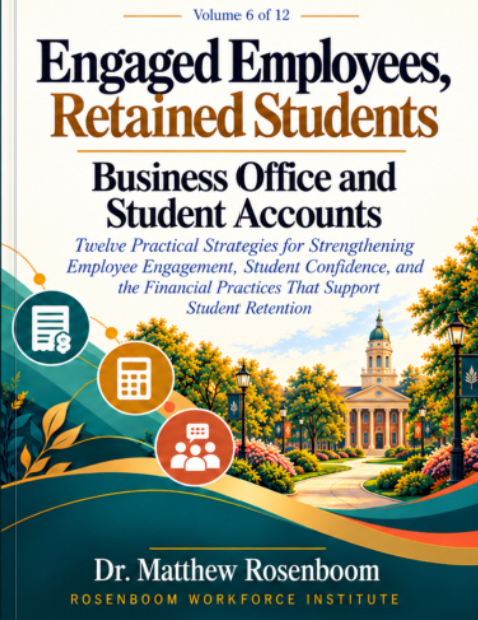
Engaged Employees Retained Students: Business Office and Student Accounts
Twelve Practical Strategies for Strengthening Employee Engagement, Student Financial Confidence, and the Business Office Practices That Support Student Retention
Accurate student accounts, clear financial communication, and engaged employees all contribute to a stronger student experience. Engaged Employees, Retained Students: Business Office and Student Accounts is a 275-page interactive professional development workbook exploring how Business Office employees strengthen student financial confidence, institutional trust, and student retention. Written by Dr. Matthew Rosenboom, a higher education administrator with more than 25 years of experience, this workbook connects organizational research with practical financial operations and student service strategies. Inside this workbook, readers will explore: Strengthening employee engagement within the Business Office. Building student financial confidence through clear communication. Improving student account accuracy and billing transparency. Clarifying the distinct responsibilities of Financial Aid and the Business Office. Strengthening reconciliation and cross-department collaboration. Addressing student balances, payment arrangements, and financial concerns. Managing housing charges, scholarships, enrollment changes, and withdrawal-related adjustments. Developing supportive leadership practices and effective operational workflows. Through 12 chapters and 108 fictional case studies, readers examine realistic institutional situations, coached analyses, decision-making exercises, and opportunities for individual and departmental improvement. A Positive, Practical Approach This workbook does not suggest that Financial Aid should control the Business Office or that the Business Office should control Financial Aid. Instead, it demonstrates how distinct departments can respect each other's responsibilities while working toward shared institutional goals. Readers are encouraged to evaluate the scenarios, consider applicable regulatory requirements, adapt operational practices appropriately, and identify improvements suited to their institutions. Exploring Online Professional Development The Rosenboom Workforce Institute is considering online professional development programs based on its workbook library. Proposed options include individual training in one selected topic for $149 annually and departmental subscriptions of $4,500 annually, allowing unlimited employees within one department to participate. These online programs are not yet available. Printed workbooks are sold separately. Learn more or express interest at rosenboomtaxandadvisory.net.
Available in Paperback
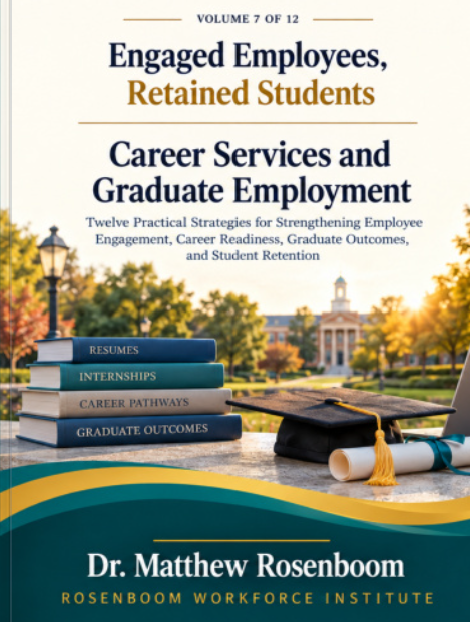
ENGAGED EMPLOYEES, RETAINED STUDENTS: Career Services and Graduate Employment
Twelve Practical Strategies for Strengthening Employee Engagement, Career Readiness, Graduate Outcomes, and Student Retention
Career preparation begins long before graduation—and the employees who support that journey play an important role in student success and retention. Engaged Employees, Retained Students: Career Services and Graduate Employment is a 256-page interactive professional development workbook exploring the connection between employee engagement, career readiness, employer relationships, graduate employment outcomes, and student retention. Written by Dr. Matthew Rosenboom, a higher education administrator with more than 25 years of experience, this workbook connects organizational research with practical strategies for strengthening Career Services operations. Inside this workbook, readers will explore: Strengthening employee engagement and professional development within Career Services. Connecting career exploration with the student experience from enrollment through graduation. Developing meaningful employer partnerships and internship opportunities. Improving career advising, résumé preparation, and interview readiness. Documenting graduate employment outcomes and strengthening reporting practices. Establishing clear responsibilities for career services management systems and records. Improving collaboration among Career Services, Admissions, Academic Affairs, and institutional leadership. Building sustainable workflows that support both employees and students. Through 12 chapters, realistic institutional scenarios, worked decision examples, reflection exercises, and practical planning tools, readers can assess existing strengths and identify opportunities for improvement. A Positive, Practical Approach This workbook recognizes that effective Career Services departments depend on more than individual employee effort. Institutional support, clear responsibilities, appropriate resources, and engaged employees all contribute to meaningful student experiences. Readers are encouraged to explore the examples, evaluate the evidence, adapt operational approaches, and develop strategies appropriate for their institutions. Exploring Online Professional Development The Rosenboom Workforce Institute is considering self-paced online training programs based on its workbook library. Proposed options include individual access to one selected topic for $149 annually and institutional departmental subscriptions for $4,500 annually, allowing unlimited employees within one department to participate.
Available in Paperback