


Five Departments, One Student Experience
Discover how the Rosenboom Workforce Institute's professional development workbooks can help institutions strengthen cross-departmental collaboration.
This complimentary 18-page facilitator's guide includes five introductory training sessions, realistic institutional scenarios, discussion questions, and suggested facilitator responses.
The guide shows how the five companion workbooks work together to support structured professional development.
This complimentary resource introduces the learning experience. The companion workbooks provide the detailed instruction, additional case studies, exercises, and reference materials for continued departmental training.
We encourage institutions to explore the complete five-workbook collection to build upon the ideas introduced in this guide.
Four Departments, One Student Journey
From Enrollment to Employment: Strengthening Employee Engagement, Student Support, and Career Readiness
Three Perspectives, One Institutional Culture
Strengthening Employee Engagement, Leadership, and Continuous Improvement
A strong institutional culture develops when employees feel supported, leadership provides clear direction, and continuous improvement becomes a shared responsibility.
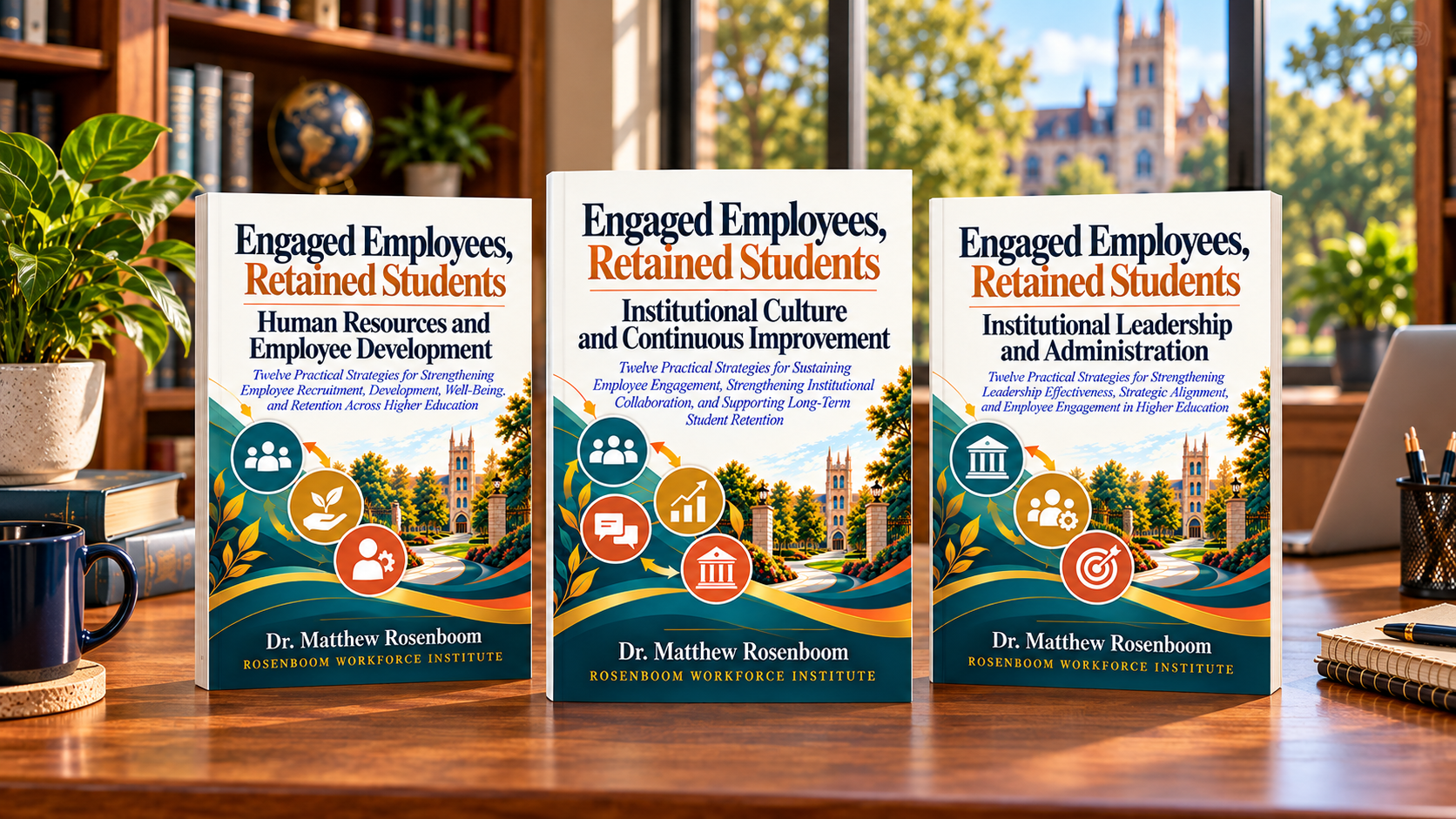
The Rosenboom Workforce Institute's third featured collection brings together three professional development workbooks from the Engaged Employees, Retained Students series:
Human Resources and Employee Development
Institutional Leadership and Administration
Institutional Culture and Continuous Improvement
Each workbook explores a different but interconnected aspect of institutional effectiveness, offering practical strategies, realistic scenarios, guided reflection, and professional development exercises designed to strengthen employee engagement, organizational collaboration, and institutional performance.
Together, these publications encourage institutions to build upon existing strengths, support employee growth, improve communication, and create workplace environments where both employees and students can succeed.
A complimentary 17-page facilitator's guide, Three Perspectives, One Institutional Culture, introduces the collection through three interactive professional development sessions. The guide provides discussion questions, institutional scenarios, suggested facilitator responses, and practical improvement activities.
Three perspectives. One institutional culture. A shared commitment to employee engagement and continuous improvement.
Building a Better Financial Aid Office
A Practical Guide to Stronger Foundations, Clearer Processes, and Greater Student Impact
A successful financial aid office does more than administer financial assistance. It helps students navigate complex requirements, provides reliable guidance, and contributes to the institution’s overall effectiveness.
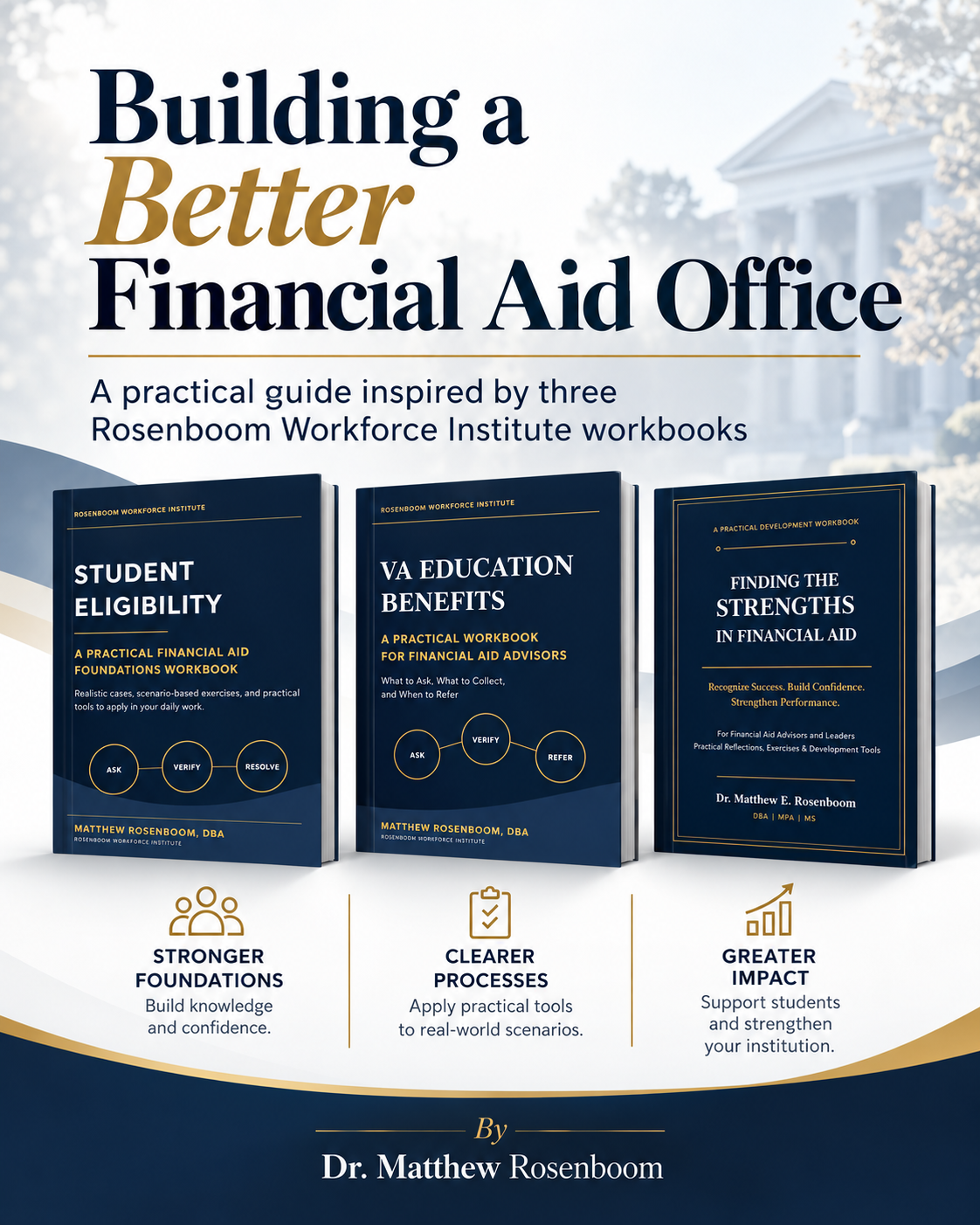
Building a Better Financial Aid Office is a free professional development guide from the Rosenboom Workforce Institute that introduces practical approaches to strengthening financial aid operations, building employee confidence, and improving the student experience.
Drawing on three Rosenboom Workforce Institute workbooks—Student Eligibility, VA Education Benefits, and Finding the Strengths in Financial Aid—this guide explores the importance of accurate decision-making, effective communication, recognizing employee strengths, and building supportive operational practices.
Designed for financial aid professionals, directors, and higher education leaders, the guide encourages readers to reflect on existing strengths, identify improvement opportunities, and consider practical approaches they can adapt to their own institutions.
Download this complimentary guide to explore how stronger foundations, clearer processes, and engaged employees can build a more effective financial aid office and improve student outcomes.
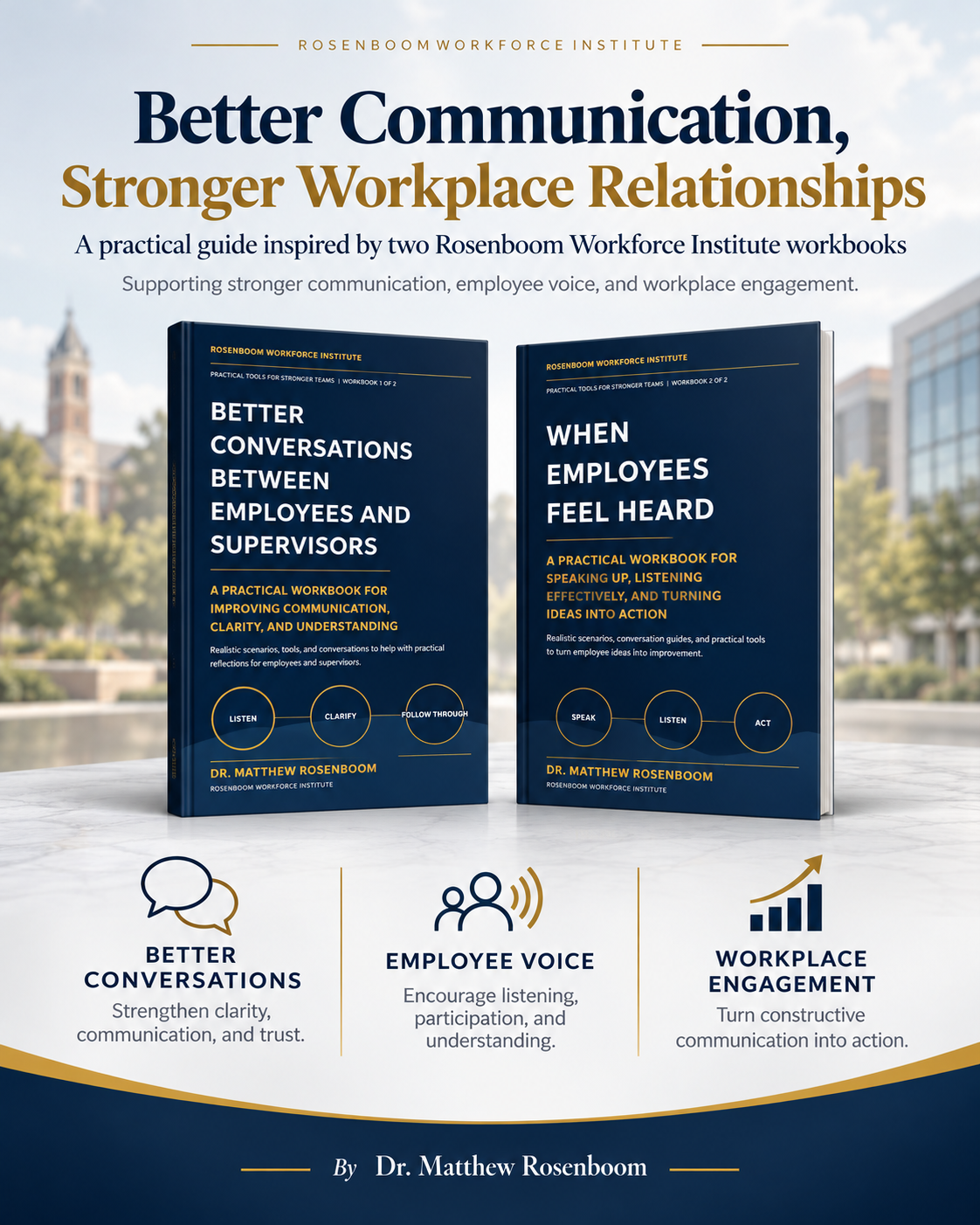
Better Communication, Stronger Workplace Relationships
A Practical Guide to Employee Voice, Supervisor Communication, and Workplace Engagement
Strong workplace relationships begin with meaningful communication. When employees feel comfortable sharing ideas, supervisors listen with intention, and organizations follow through on feedback, workplaces can become more collaborative, supportive, and effective.
Better Communication, Stronger Workplace Relationships is a FREE professional development guide from the Rosenboom Workforce Institute designed to help employees, supervisors, and organizational leaders strengthen communication, encourage employee participation, and build a workplace culture where people feel heard and valued.
Inspired by two Rosenboom Workforce Institute workbooks—Better Conversations Between Employees and Supervisors and When Employees Feel Heard—this guide explores practical approaches to improving everyday workplace interactions.
Readers will explore the importance of employee voice, constructive feedback, supervisor communication, and turning conversations into meaningful organizational improvements.
The guide also includes practical reflection activities, team discussion exercises, and a 30-day communication improvement plan that readers can adapt to their individual workplaces.
Whether you work in higher education, business, nonprofit administration, or another organizational setting, this resource offers practical ideas for creating stronger professional relationships and encouraging greater employee engagement.
Download your complimentary copy today. No purchase or email address is required.
Better conversations. Stronger relationships. More engaged workplaces.
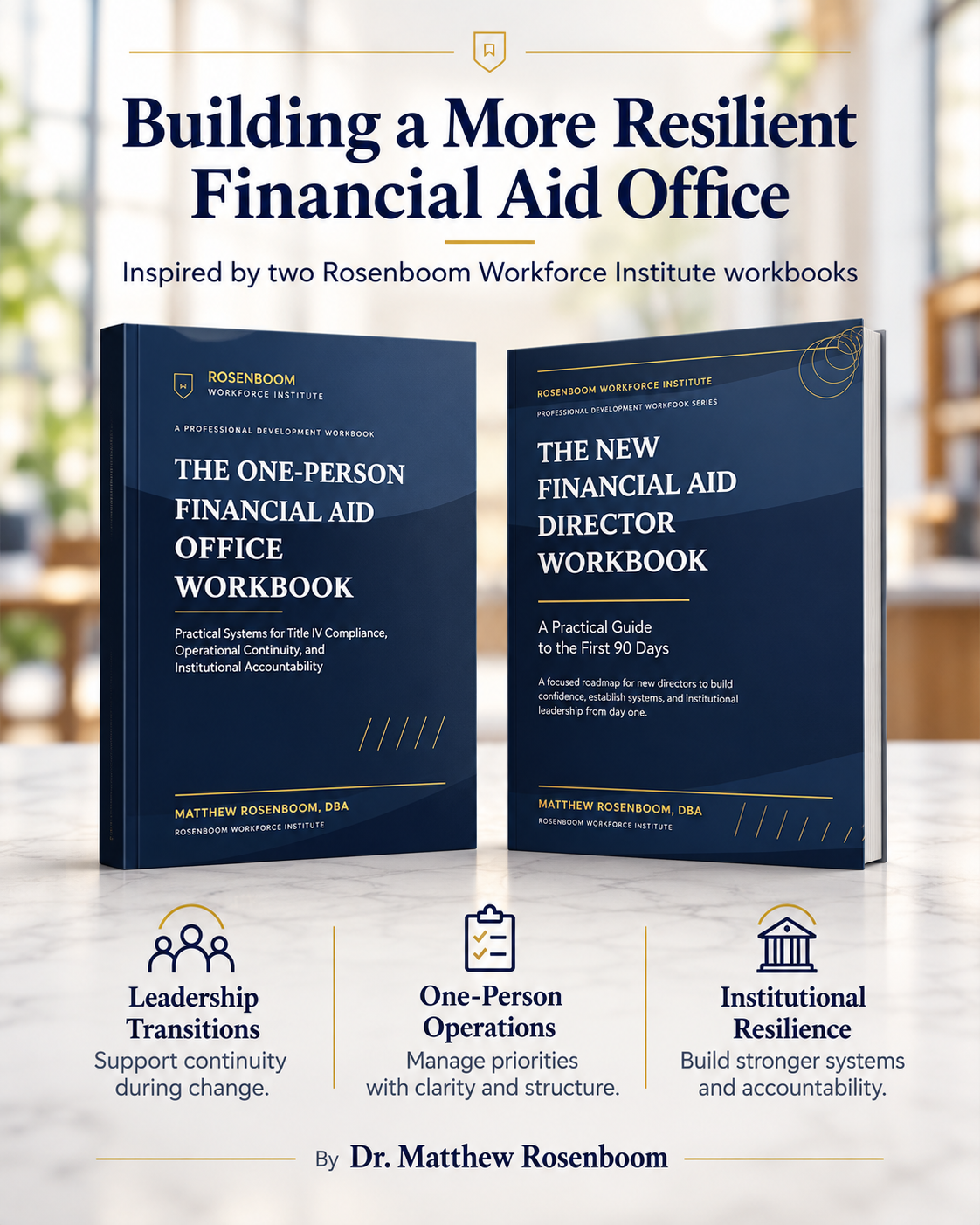
Building a More Resilient Financial Aid Office
A Practical Guide to Leadership Transitions, One-Person Operations, and Institutional Continuity
A strong financial aid office depends on more than policies, procedures, and technology. It requires knowledgeable professionals, effective leadership, clear responsibilities, and operational practices that support continuity even when staffing and institutional circumstances change.
Building a More Resilient Financial Aid Office is a FREE 16-page professional development guide from the Rosenboom Workforce Institute designed to help financial aid professionals and institutional leaders strengthen daily operations, navigate leadership transitions, and maintain effective student support in challenging environments.
Drawing on two Rosenboom Workforce Institute workbooks—The One-Person Financial Aid Office Workbook and The New Financial Aid Director Workbook: A Practical Guide to the First 90 Days—this guide explores practical ways to build stronger, more sustainable financial aid operations.
Readers will explore:
Strengthening operational continuity during staffing and leadership changes.
Managing competing responsibilities in small and one-person financial aid offices.
Building clearer communication and accountability across institutional departments.
Recognizing operational vulnerabilities before they become larger problems.
Supporting financial aid professionals through effective institutional leadership.
Developing a practical 30-day continuity improvement plan.
The guide also includes reflective exercises, a financial aid office resilience self-assessment, and practical activities that can be adapted to institutions of different sizes and organizational structures.
Whether you are a newly appointed financial aid director, an experienced administrator managing an understaffed office, or an institutional leader responsible for supporting financial aid operations, this resource offers practical ideas for strengthening the people and processes essential to institutional success.
Download your complimentary copy today. No purchase or email address is required.
Stronger leadership. Sustainable operations. Greater institutional resilience.
The Institutional Conditions Behind Employee Engagement
A Complimentary Executive Brief on Job Satisfaction, Work Engagement, and Organizational Effectiveness
What if improving employee engagement begins not with asking employees to do more, but with examining the institutional conditions that shape their everyday work experiences?
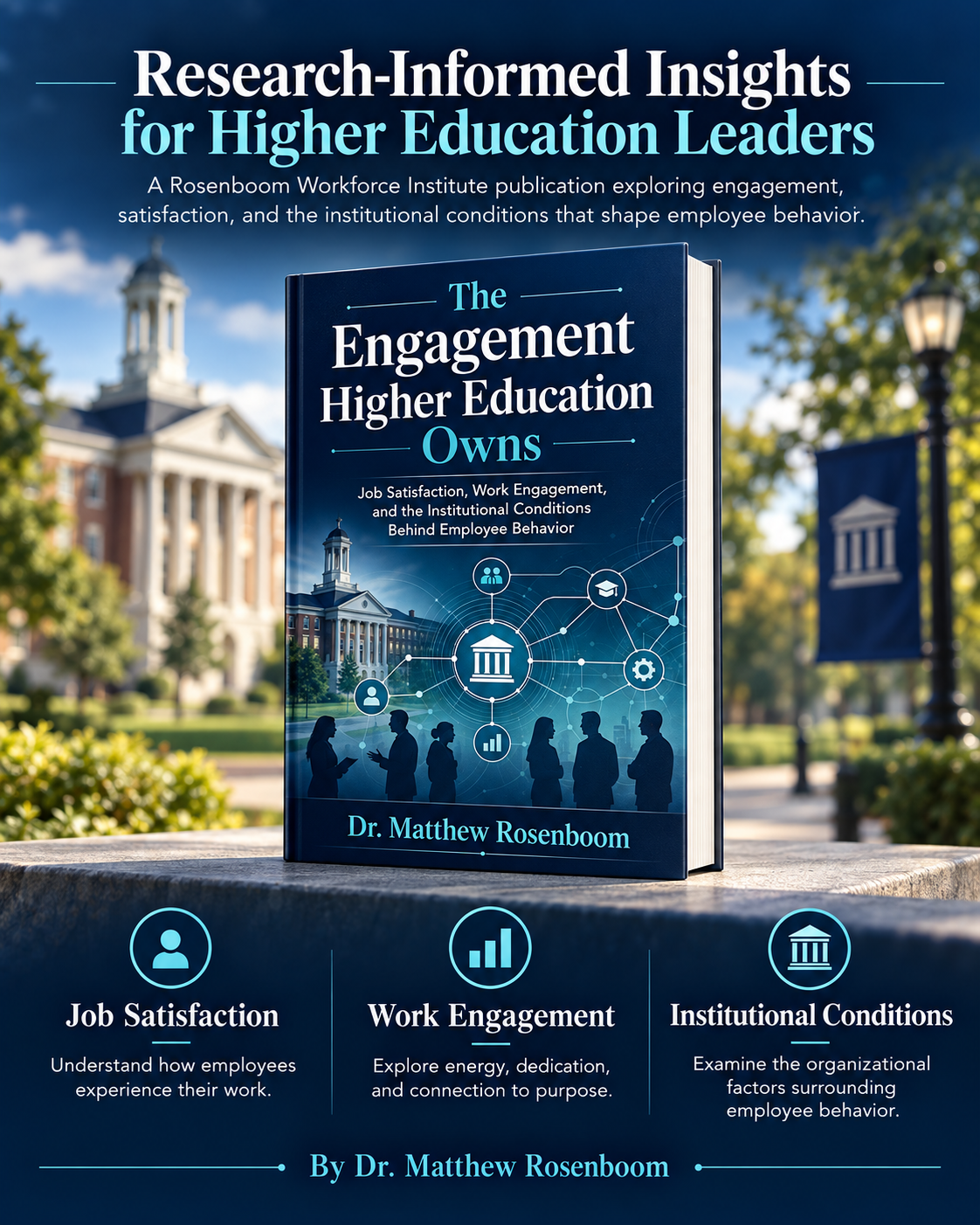
The Institutional Conditions Behind Employee Engagement is a FREE 10-page executive brief from the Rosenboom Workforce Institute designed to help higher education leaders explore the relationship between employee satisfaction, work engagement, organizational support, and institutional effectiveness.
Drawing on the research and professional insights presented in Dr. Matthew Rosenboom's book, The Engagement Higher Education Owns: Job Satisfaction, Work Engagement, and the Institutional Conditions Behind Employee Behavior, this brief encourages institutional leaders to consider how workplace systems, leadership practices, communication, and organizational expectations influence the employee experience.
Inside this complimentary executive brief, readers will explore:
The important distinction between job satisfaction and work engagement.
How institutional structures and everyday workplace practices can support employee effectiveness.
The importance of employee voice, supervisor support, and meaningful leadership follow-through.
How operational obstacles and departmental processes can affect employees' ability to perform their responsibilities.
Practical questions institutional leaders can use to evaluate existing organizational strengths and opportunities for improvement.
A 30-day leadership improvement plan focused on thoughtful, measurable organizational change.
The brief also introduces findings from Dr. Rosenboom's doctoral research examining relationships among job satisfaction, work engagement, and counterproductive work behavior in educational institutions.
Designed for college presidents, senior administrators, human resources professionals, department directors, and other organizational leaders, this resource offers a practical, research-informed perspective on creating workplace conditions that support both employees and institutional objectives.
Employee engagement is not simply an individual responsibility. Institutions have an important role in creating environments where employees can succeed.
Readers interested in exploring these concepts further are encouraged to discover the companion book, The Engagement Higher Education Owns, available on Amazon.
Download your complimentary executive brief today. No purchase or email address is required.
Stronger employees. More supportive institutions. Greater organizational effectiveness.
Recognizing Institutional Risk Before It Becomes an Audit Finding
A Complimentary Executive Brief on Governance, Operational Continuity, and Risk Management in Higher Education
What if the earliest warning signs of institutional compliance problems appear long before an auditor identifies a finding?
Higher education institutions operate within complex regulatory environments where effective governance, clear accountability, and reliable operational processes are essential. Yet compliance vulnerabilities can develop gradually through inconsistent procedures, unclear responsibilities, communication gaps, and organizational changes that increase pressure on employees and institutional systems.
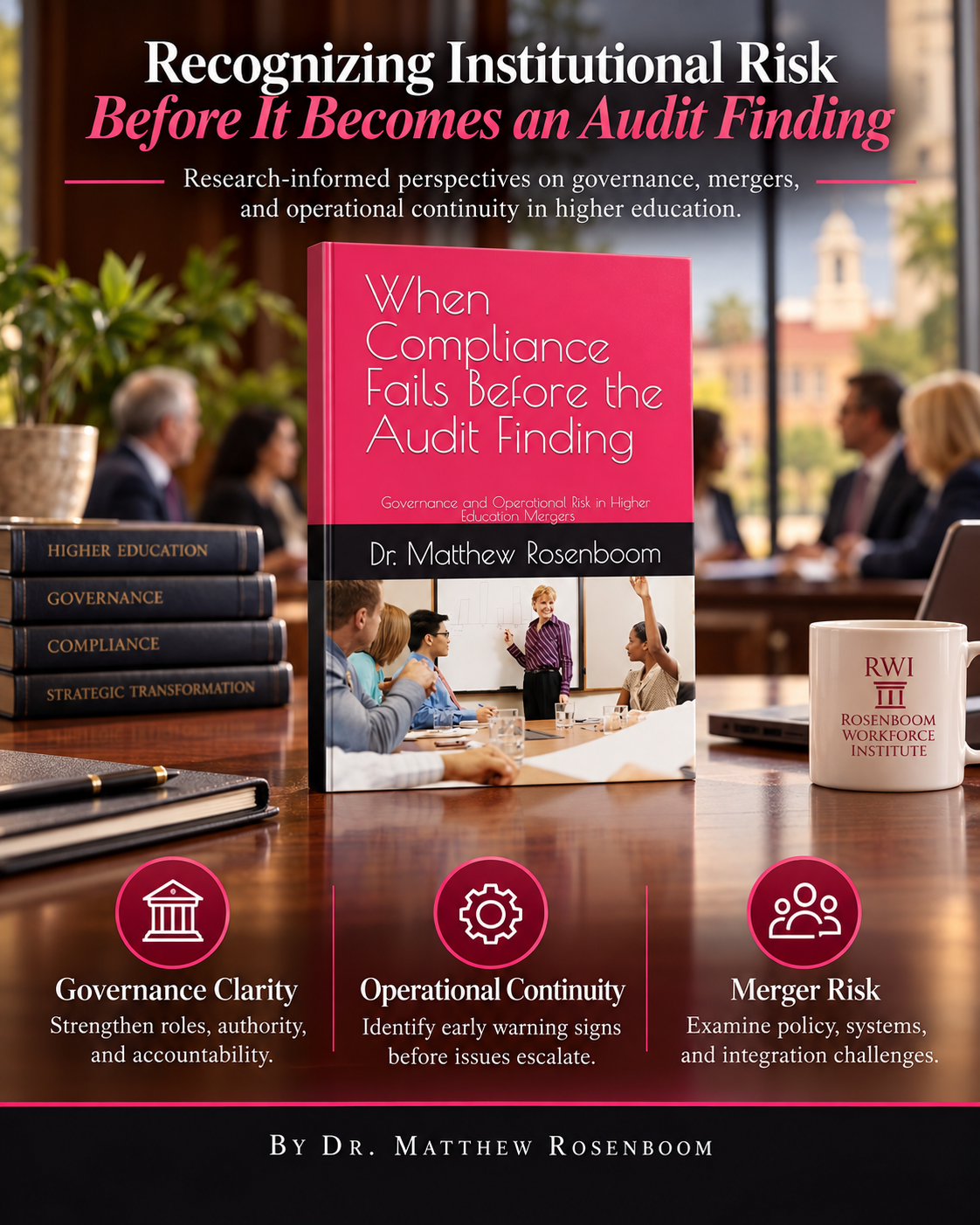
Recognizing Institutional Risk Before It Becomes an Audit Finding is a FREE executive brief from the Rosenboom Workforce Institute designed to help college presidents, senior administrators, governing boards, compliance professionals, and institutional leaders spot potential operational vulnerabilities before they become more significant concerns.
Inspired by Dr. Matthew Rosenboom's book, When Compliance Fails Before the Audit Finding: Governance and Operational Risk in Higher Education Mergers, this brief examines how institutional structures, leadership decisions, workforce capacity, and operational practices can shape compliance effectiveness, especially during periods of institutional change.
Inside this complimentary executive brief, readers will explore:
The importance of governance clarity, defined responsibilities, and institutional accountability.
How operational inconsistencies and undocumented workarounds can create compliance vulnerabilities.
Why mergers, acquisitions, and organizational restructuring require careful coordination of policies, systems, and responsibilities.
The relationship between employee capacity, institutional support, and reliable compliance operations.
Practical questions leaders can use to identify emerging operational risks.
A structured executive risk discussion exercise and a 30-day early-warning action plan.
The brief encourages institutional leaders to look beyond whether policies exist and consider whether the institution has the people, systems, communication practices, and organizational support necessary to implement those policies consistently.
Explore Our Professional Development Workbooks Volume I
The Rosenboom Workforce Institute publishes practical professional development workbooks for higher education employees, supervisors, and institutional leaders.
Our complimentary resources introduce selected workbook collections and offer sample exercises and discussion opportunities that show how the publications can support departmental training.
Explore the resources, discover the companion workbooks, and build a professional development library suited to your institution.
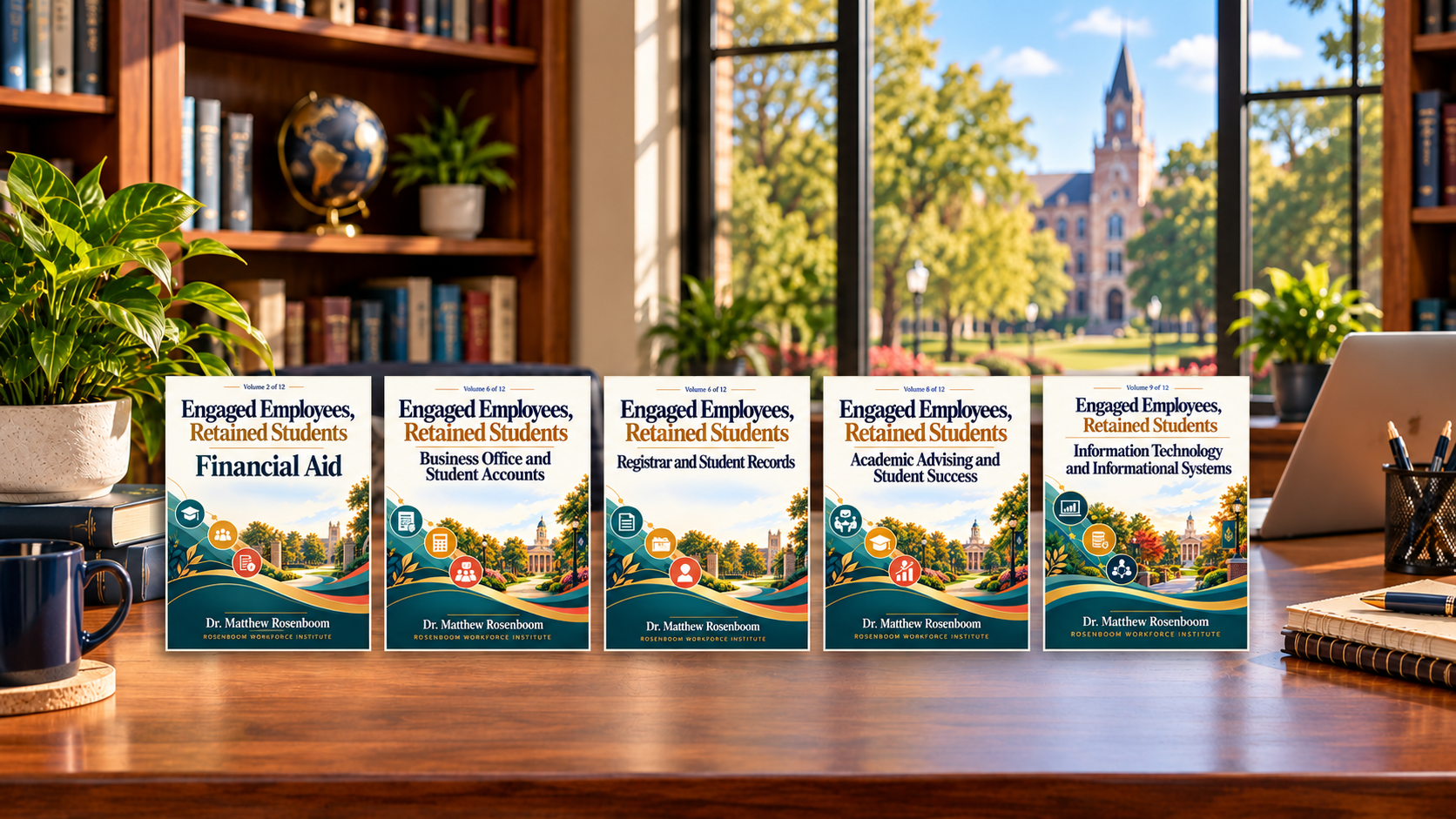
Five Departments, One Student Experience
Five Professional Development Workbooks. One Shared Institutional Mission.
.
Students experience an institution as a whole, even though employees work within different departments.
The Rosenboom Workforce Institute's first featured collection brings together five published professional development workbooks addressing Financial Aid, Business Office and Student Accounts, Registrar and Student Records, Academic Advising and Student Success, and Information Technology and Information Systems.
Each workbook offers department-specific instruction, practical case studies, guided analyses, and exercises that encourage thoughtful discussion and operational improvement.
Together, these five publications provide a broader training and reference collection designed to strengthen departmental collaboration, clarify responsibilities, support employee engagement, and improve the student experience.
Institutions may purchase individual workbooks for departmental use or acquire all five as a coordinated professional development collection
Preview the Learning — Download Your Complimentary Facilitator's Guide
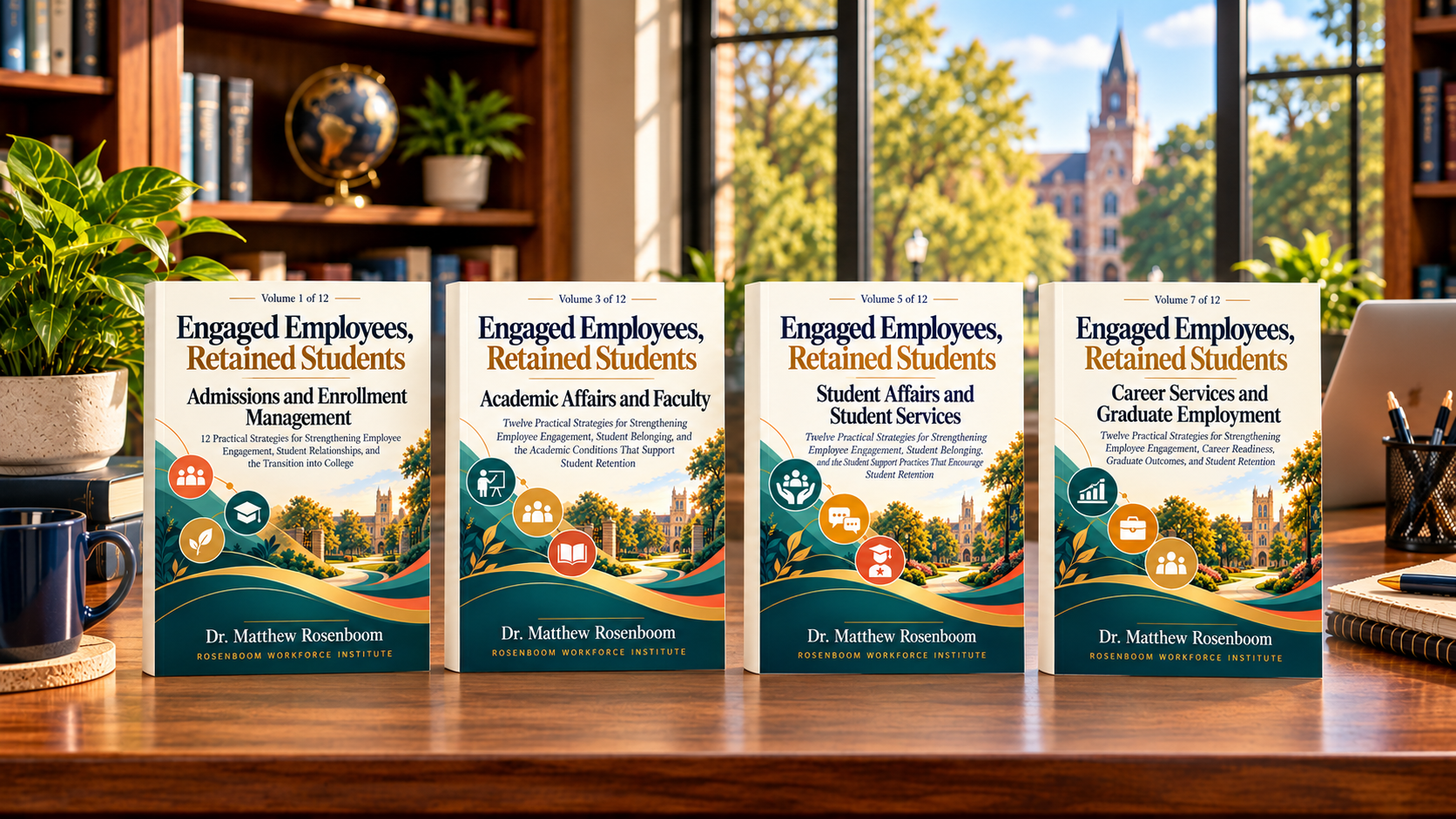
Students experience higher education as a journey, from their first interaction with Admissions through academic progress, student support, graduation, and career preparation.
The Rosenboom Workforce Institute's second featured collection brings together four professional development workbooks addressing Admissions and Enrollment Management, Academic Affairs and Faculty, Student Affairs and Student Services, and Career Services and Graduate Employment.
Each workbook provides department-specific instruction, realistic scenarios, guided analyses, and practical exercises designed to strengthen employee engagement, student belonging, institutional collaboration, and student success.
Together, these four publications provide a coordinated professional development and reference collection that encourages institutions to support employees while helping students progress from enrollment toward graduation and employment.
Institutions may purchase the workbooks individually or use all four as a comprehensive professional development collection.
A complimentary facilitator's guide, Four Departments, One Student Journey, shows how to use these publications together. The complete workbooks provide the deeper instruction, case studies, and exercises for continued departmental learning.