Explore More Professional Development Resources
Practical Learning. Meaningful Conversations. Stronger Institutions.
Professional development is most valuable when it encourages reflection, strengthens understanding, and creates opportunities to apply new ideas in everyday institutional operations.
The Rosenboom Workforce Institute continues to expand its collection of complimentary professional development resources designed for higher education employees, supervisors, and institutional leaders.
These resources introduce important topics in financial aid administration, employee engagement, workplace satisfaction, organizational leadership, and institutional effectiveness. Each offers practical insights, opportunities for reflection, and ideas you can explore individually or in departmental discussions.
Many of these complementary resources also introduce topics explored more extensively in our published professional development workbooks, which offer additional exercises, realistic scenarios, discussion questions, and practical applications.
Explore the resources, share them with colleagues, and find new ways to strengthen your institution through ongoing learning and professional engagement.
When Change Exhausts Good Employees
A Complimentary Facilitator’s Guide to Change Fatigue, Employee Motivation, and Sustainable Institutional Improvement
Institutional change is often necessary, but when new initiatives, competing priorities, and increasing workloads accumulate without adequate support, even highly committed employees can begin to withdraw. Declining discretionary effort may reflect more than individual motivation; it can also signal organizational conditions that deserve closer examination.
This complimentary 20-page facilitator’s guide explores the relationship between change fatigue, employee engagement, and institutional effectiveness. Featuring a continuing fictional higher education scenario, three facilitated learning sessions, discussion exercises, practical worksheets, and a 30-day improvement plan, the guide helps institutional leaders and employees identify early warning signs, evaluate competing demands, and consider strategies for sustainable improvement.
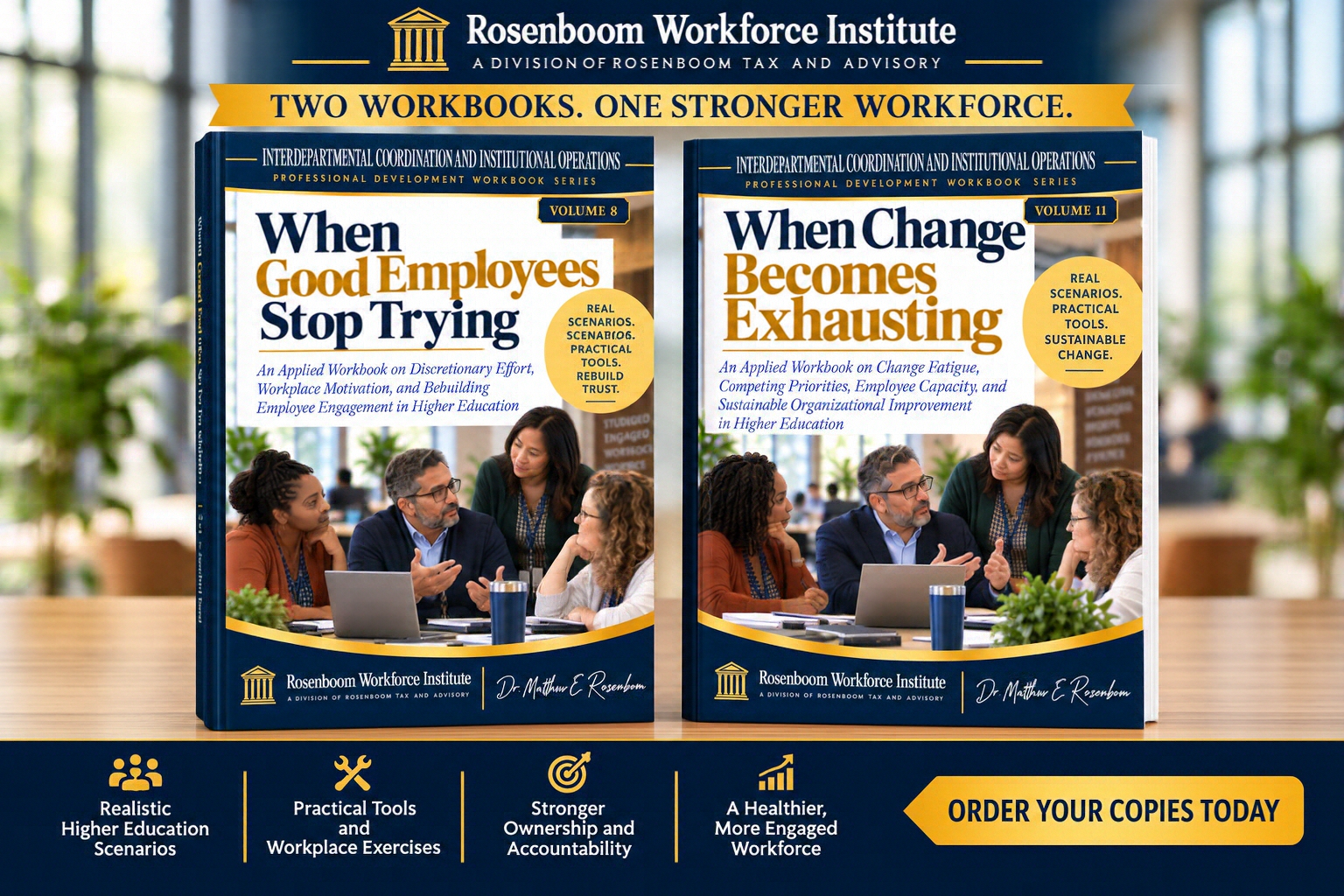
The guide complements two Rosenboom Workforce Institute workbooks: When Good Employees Stop Trying (Volume 8) and When Change Becomes Exhausting (Volume 11). Together, these resources provide a broader understanding of how workplace conditions influence employee motivation, organizational stability, and the successful implementation of institutional change.
Conversations That Influence Student Retention
A Complimentary Facilitator’s Guide to Effective Student Communication, Difficult Conversations, and Student Persistence
A single conversation can influence how a student perceives an institution, particularly when that student is frustrated, overwhelmed, or considering withdrawing. How employees listen, respond, communicate, and follow through can make a meaningful difference in the student experience and ultimately influence persistence and retention.
This complimentary 20-page facilitator’s guide explores how higher education professionals can strengthen student interactions, navigate difficult conversations, and recognize opportunities to provide meaningful support. Featuring a continuing fictional student scenario, three facilitated learning sessions, discussion exercises, practical worksheets, and a 30-day improvement plan, the guide provides a structured resource for individual reflection or team-based professional development.
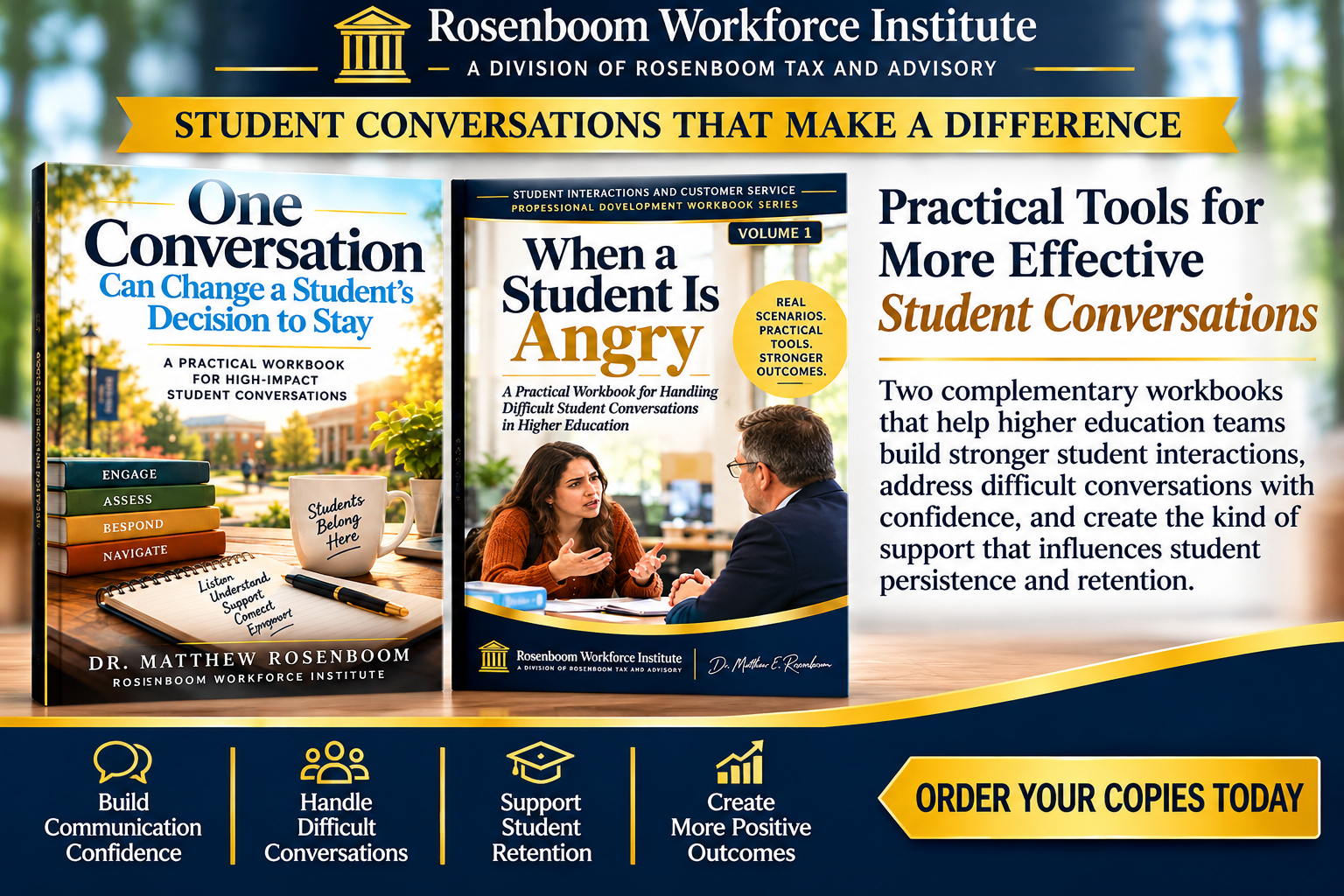
The guide complements two Rosenboom Workforce Institute workbooks: One Conversation Can Change a Student’s Decision to Stay and When a Student Is Angry (Volume 1). Together, these resources help higher education professionals develop stronger communication skills, respond more effectively to challenging student situations, and create experiences that support student satisfaction, institutional trust, and retention.
Starting Strong in Enrollment and Financial Aid
A Complimentary Facilitator’s Guide to Cross-Departmental Onboarding, Communication, and Student Enrollment Success
The relationship between Admissions and Financial Aid plays a critical role in the student enrollment experience. When new employees understand how these departments interact, they are better prepared to communicate accurately, coordinate responsibilities, prevent unnecessary delays, and support students throughout the enrollment process.
This complimentary 21-page facilitator’s guide explores the importance of cross-departmental understanding during the first 90 days of employment. Featuring a continuing fictional student scenario, three facilitated learning sessions, discussion exercises, practical worksheets, and a 30-day improvement plan, the guide provides a structured resource for individual onboarding or team-based professional development.
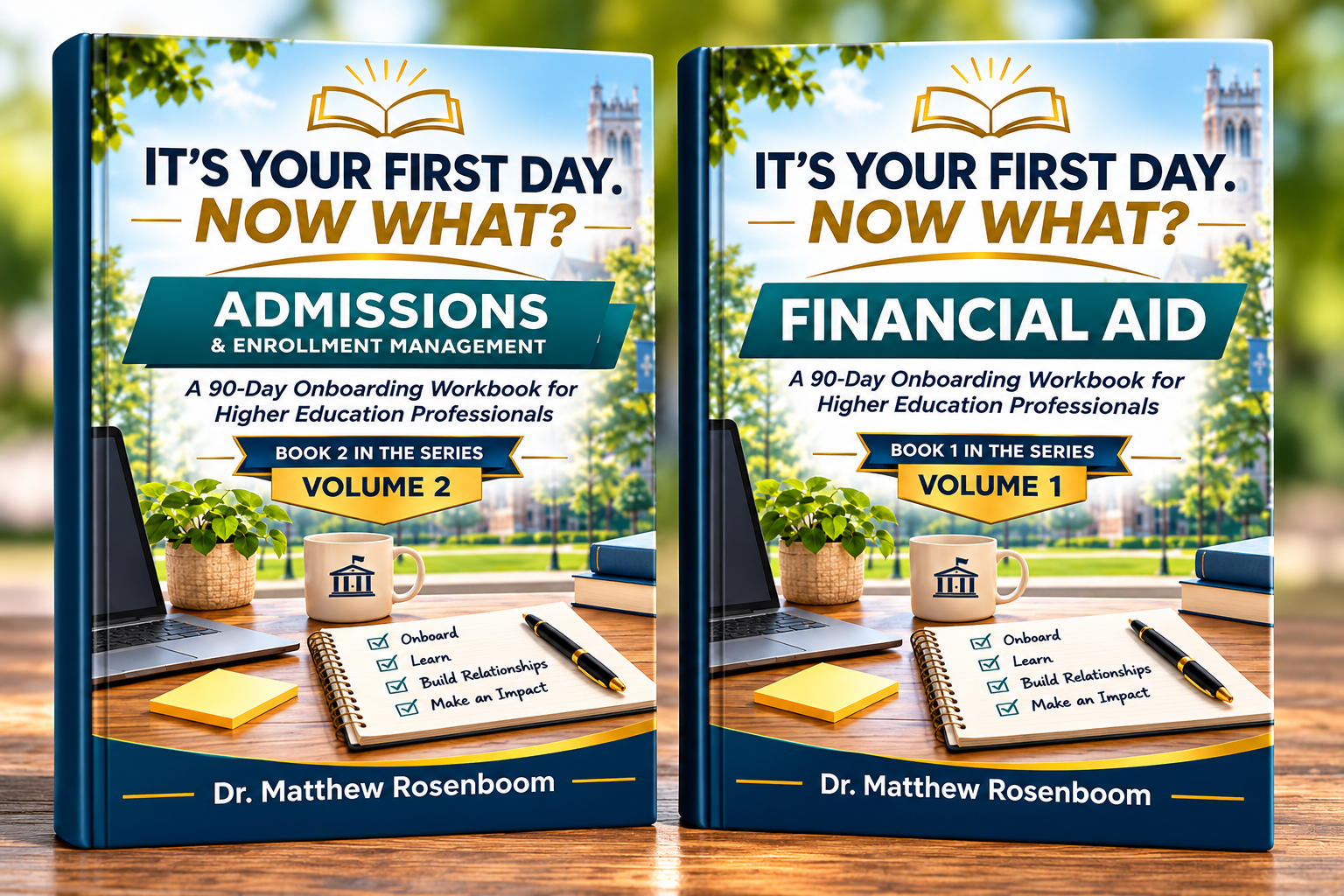
The guide complements two Rosenboom Workforce Institute workbooks: It’s Your First Day. Now What? — Financial Aid (Volume 1) and It’s Your First Day. Now What? — Admissions & Enrollment Management (Volume 2). Together, these resources help new higher education professionals understand departmental responsibilities, strengthen communication, and develop the collaborative practices necessary to support enrollment and student success.
Building Accuracy and Accountability in Student Records and Accounts
A Complimentary Facilitator’s Guide to Cross-Departmental Onboarding, Communication, and Operational Accuracy
Accurate student records and financial accounts are essential to institutional operations and the student experience. When Registrar and Student Accounts employees understand how their responsibilities intersect, they are better prepared to coordinate registration changes, tuition charges, account adjustments, and student communications while reducing errors, processing delays, and unnecessary confusion.
This complimentary 20-page facilitator’s guide explores the importance of cross-departmental coordination during the first 90 days of employment. Featuring a continuing fictional student scenario, three facilitated learning sessions, discussion exercises, practical worksheets, and a 30-day improvement plan, the guide provides a structured resource for individual onboarding or team-based professional development.
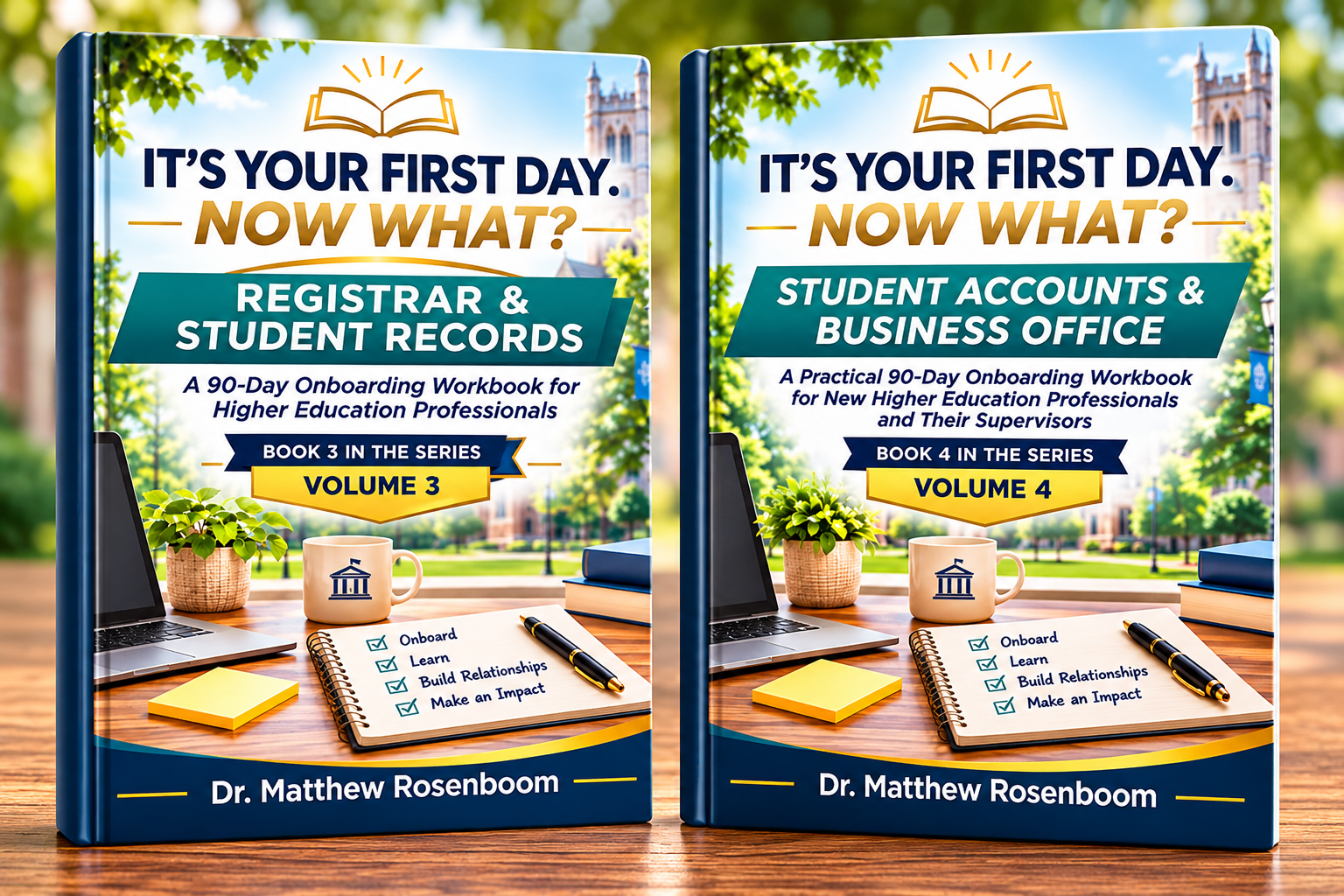
The guide complements two Rosenboom Workforce Institute workbooks: It’s Your First Day. Now What? — Registrar & Student Records (Volume 3) and It’s Your First Day. Now What? — Student Accounts & Business Office (Volume 4). Together, these resources help new higher education professionals strengthen operational accuracy, clarify departmental responsibilities, improve communication, and develop the collaborative practices necessary to support institutional effectiveness and student success.
Starting Strong in Academic Advising and Student Services
A Complimentary Facilitator’s Guide to Cross-Departmental Onboarding, Student Support, and Institutional Collaboration
Academic Advising and Student Affairs & Student Services play essential, interconnected roles in helping students navigate higher education successfully. When employees understand how these departments work together, they are better prepared to identify student needs, coordinate support services, strengthen communication, and address challenges that may affect student engagement, persistence, and success.
This complimentary 21-page facilitator’s guide explores the importance of cross-departmental coordination during the first 90 days of employment. Featuring a continuing fictional student scenario, three facilitated learning sessions, discussion exercises, practical worksheets, and a 30-day improvement plan, the guide provides a structured resource for individual onboarding or team-based professional development.
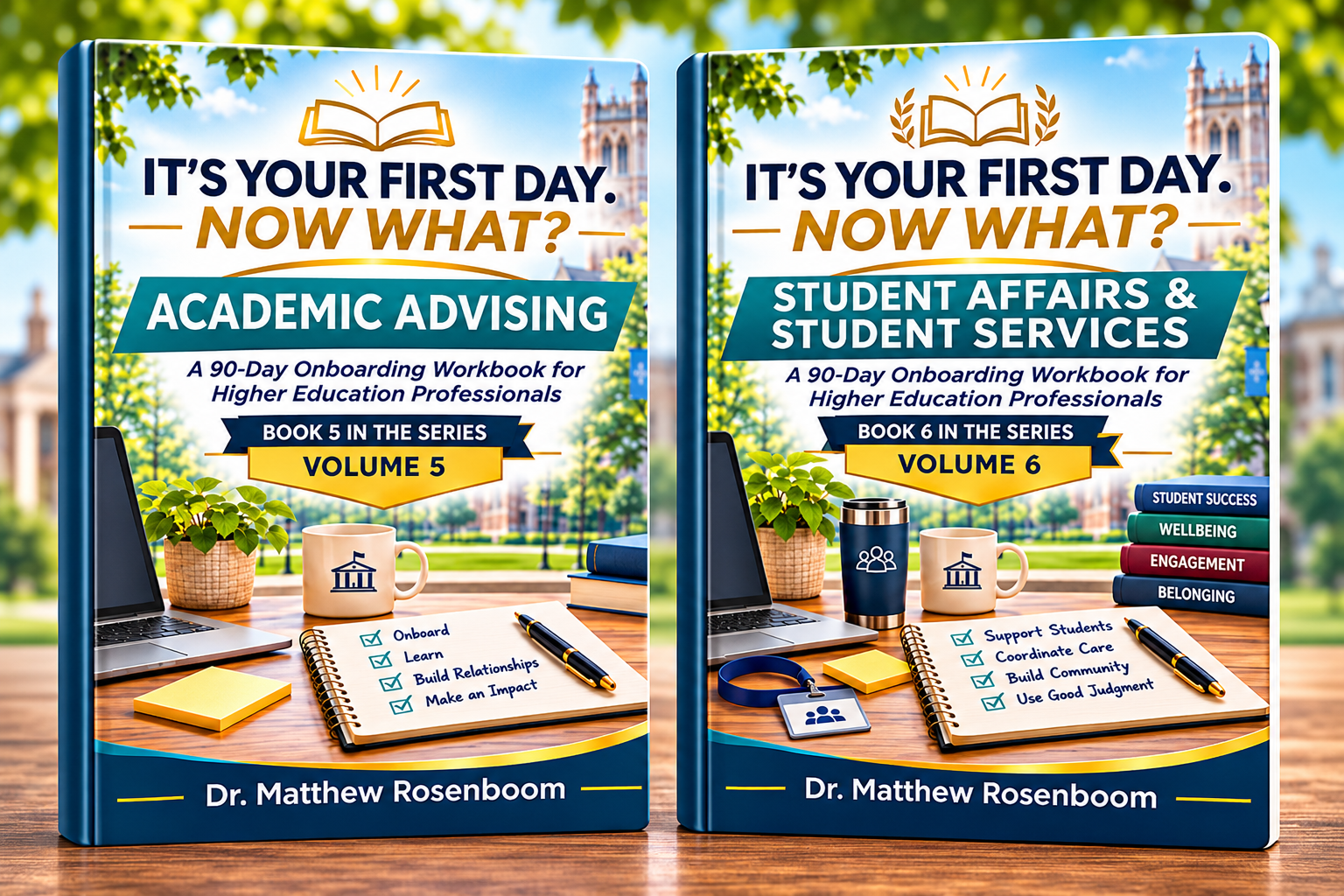
The guide complements two Rosenboom Workforce Institute workbooks: It’s Your First Day. Now What? — Academic Advising (Volume 5) and It’s Your First Day. Now What? — Student Affairs & Student Services (Volume 6). Together, these resources help new higher education professionals develop stronger collaborative practices, improve student referrals and follow-through, and create a more coordinated student support experience.