


Admissions Is Where Institutional Trust Begins Why the First Institutional Promise Matters
Admissions is where institutional trust begins. Before students meet with financial aid, attend class, or receive a bill, they have already formed expectations based on the admissions experience. When admissions is aligned, clear, and student-centered, it creates trust. When it is rushed or disconnected from the rest of the institution, confusion can become frustration later.
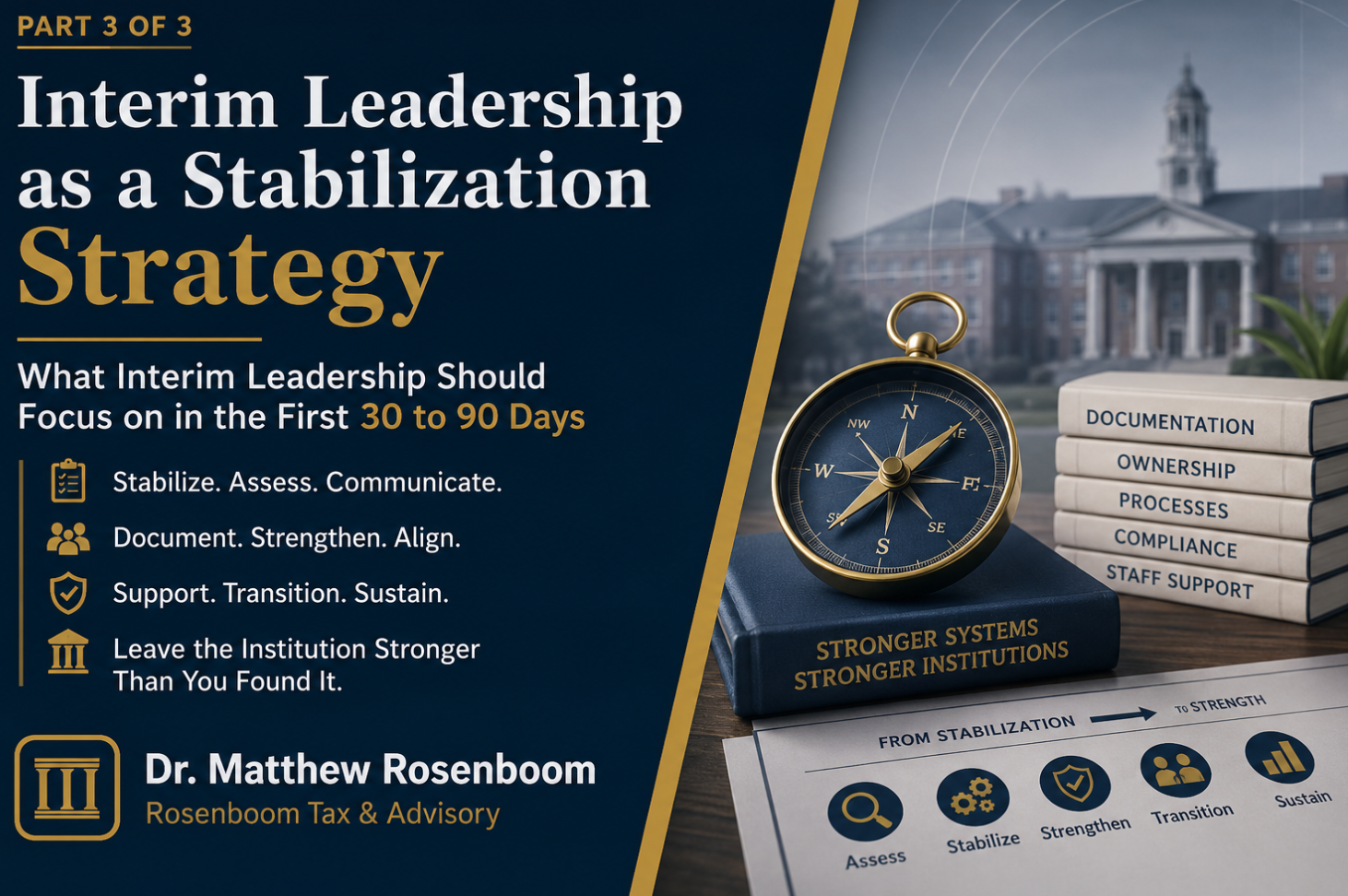
Interim Leadership as a Stabilization Strategy: Interim Leadership Should Leave the Institution Stronger Than It Found It
Interim leadership should not simply help an institution survive a vacancy. It should help the institution learn from what the vacancy revealed. When used strategically, interim and retained leadership support can strengthen ownership, rebuild fragile processes, support staff, prepare the permanent hire, improve documentation, and leave the institution stronger than it was when the transition began.
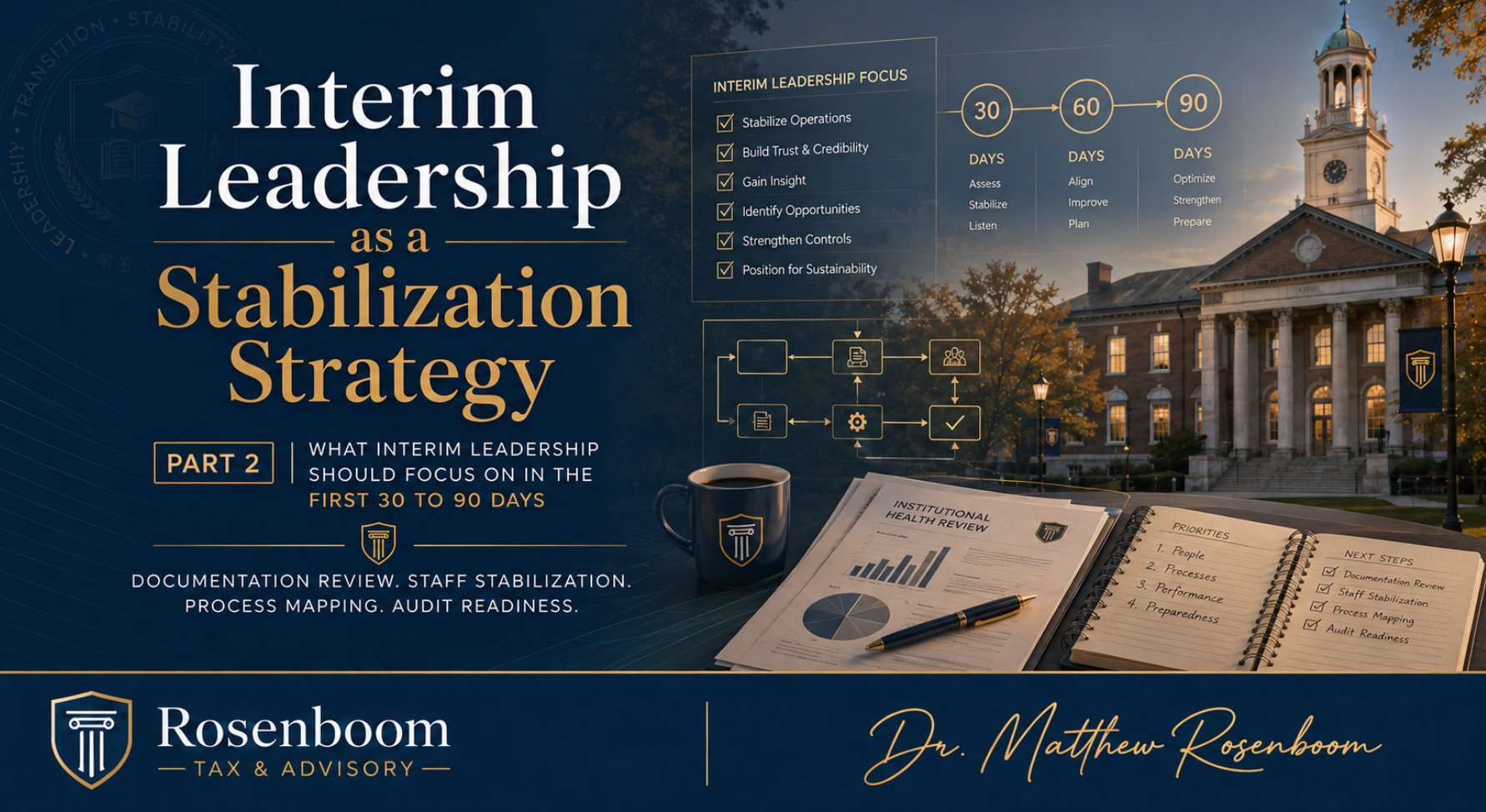
Interim Leadership as a Stabilization Strategy: What Interim Leadership Should Focus on in the First 30 to 90 Days
Interim leadership should do more than keep the office open during a vacancy. In the first 30 to 90 days, the focus should be on stabilizing staff, reviewing documentation, mapping high-risk processes, resolving student issues, improving cross-functional communication, strengthening audit readiness, and giving leadership clear visibility into operational risk before drift becomes a larger institutional problem.
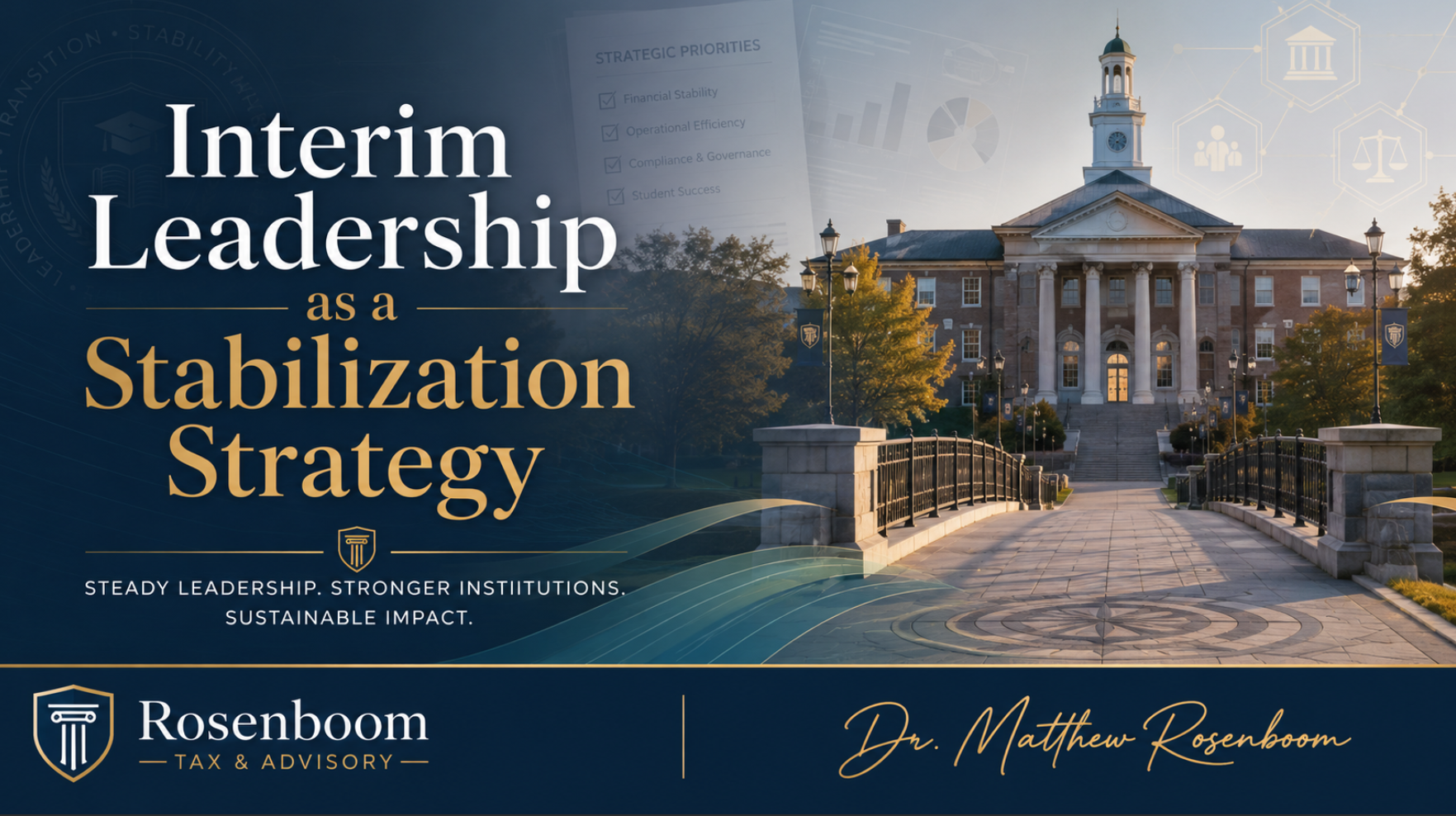
Interim Leadership as a Stabilization Strategy: The Vacancy Is Not the Risk. The Drift Is.
Leadership vacancies do not create institutional risk overnight, but they can allow operational drift to accelerate. Interim leadership should be more than temporary coverage. When used strategically, it stabilizes departments, protects compliance, supports staff, strengthens documentation, and gives institutions the breathing room needed to move through transition without losing control of the system.
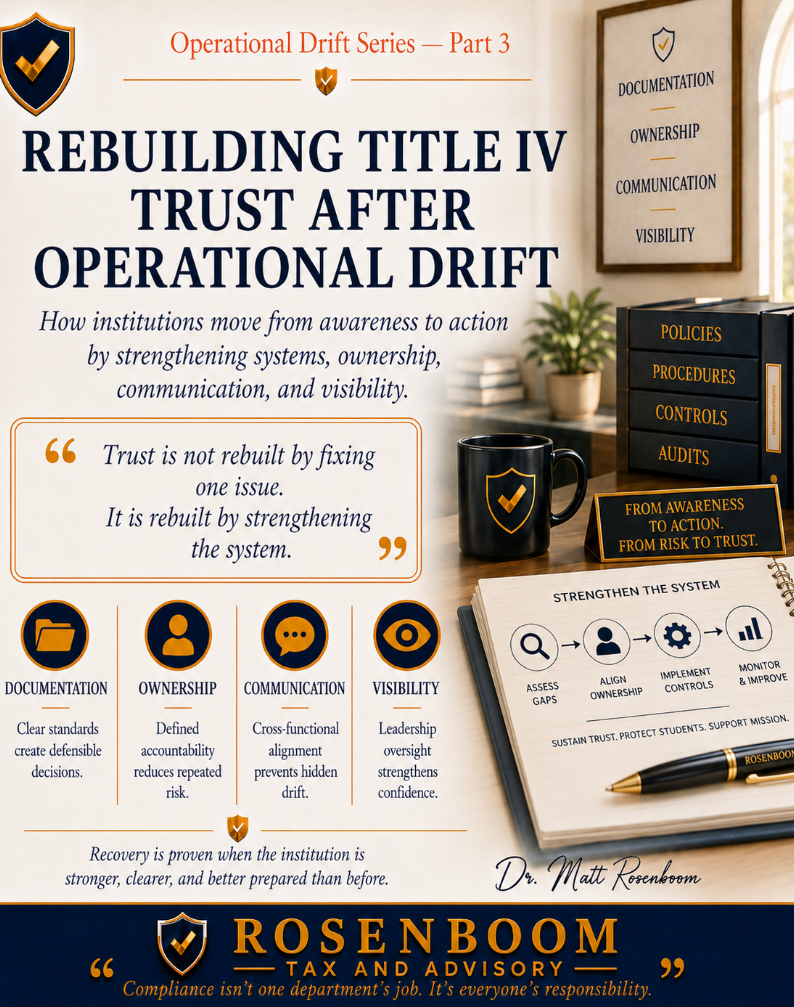
Rebuilding Title IV Trust After Operational Drift: Moving From Awareness to Action
Rebuilding Title IV trust does not end with fixing one issue. After operational drift has been identified, institutions must move from awareness to action by strengthening documentation standards, clarifying ownership, improving communication, increasing leadership visibility, and building systems that reduce repeated risk.

Rebuilding Title IV Trust After Operational Drift: Identifying Where the System Began to Drift
Operational drift is rarely found in one file, one employee, or one department. In Title IV operations, the real risk often develops in handoffs, documentation gaps, unclear ownership, and leadership blind spots long before a formal finding appears.
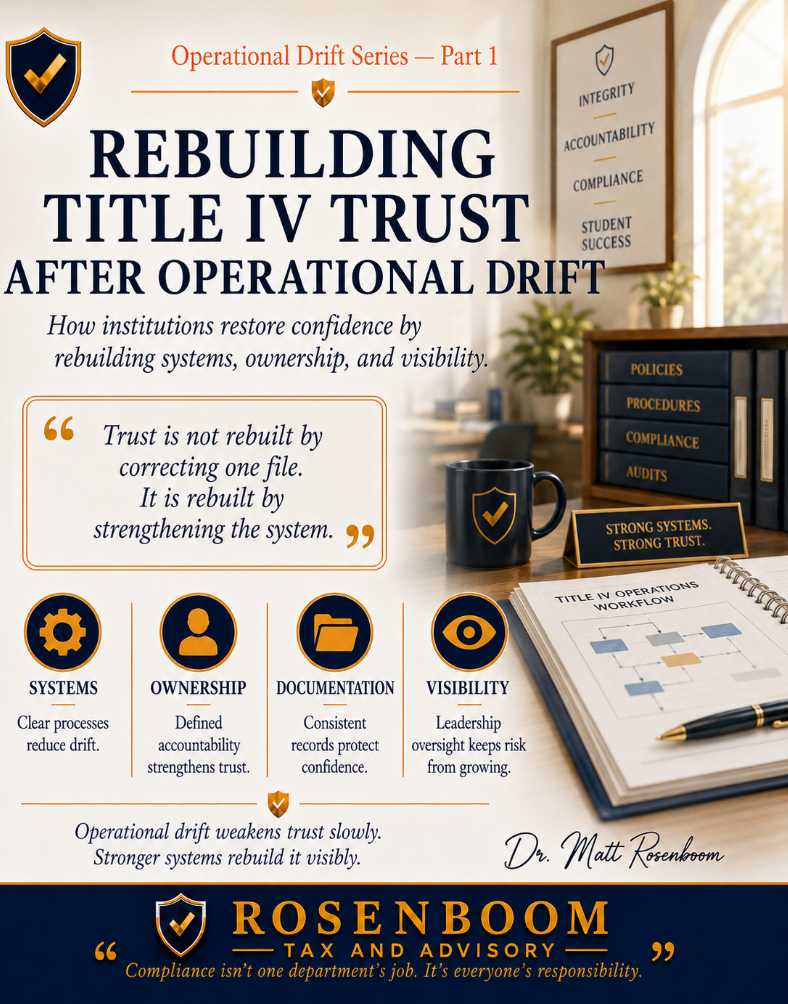
Rebuilding Title IV Trust After Operational Drift: Trust Is Lost Gradually Before It Is Questioned Publicly
Operational drift rarely happens all at once. It builds through delayed handoffs, inconsistent documentation, unclear ownership, staff strain, and leadership not seeing the risk until trust has already been weakened. In this first post of the series, I discuss how institutions can begin rebuilding Title IV trust before the busy Fall season by strengthening systems, accountability, and operational visibility.
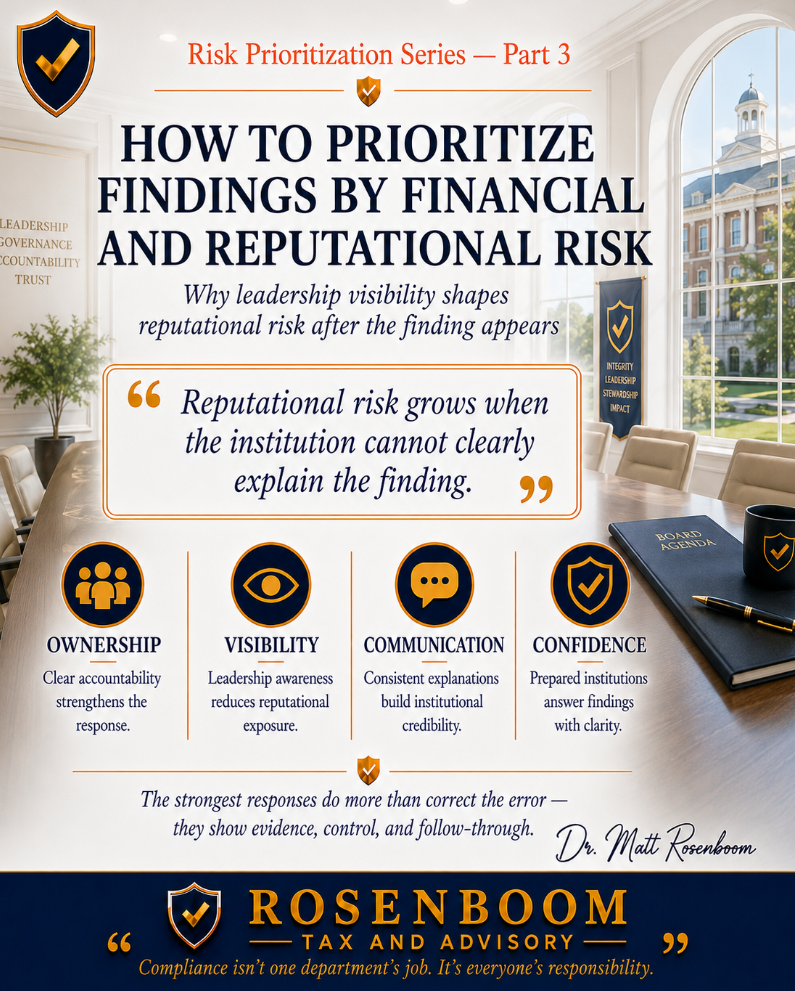
How to Prioritize Findings by Financial and Reputational Risk: Reputational Risk Grows When Leadership Cannot Explain the Finding
Reputational risk often grows after the finding, not because of the original error, but because leadership cannot clearly explain what happened, who owned the process, what changed, and how the institution knows the issue will not happen again.
In the final installment of this series, I discuss why financial findings require more than technical correction. They require leadership visibility, documentation discipline, cross-functional ownership, and a response that demonstrates the institution understands the risk beyond the file.

How to Prioritize Findings by Financial and Reputational Risk — When Financial Risk Crosses Systems, the Finding Is Bigger Than the File
Financial risk rarely stays isolated to one finding. In Part 2 of this series, I examine how institutions should evaluate findings that touch multiple systems, create repayment exposure, weaken documentation, strain staff capacity, and increase leadership risk before the issue becomes larger than the original deficiency.
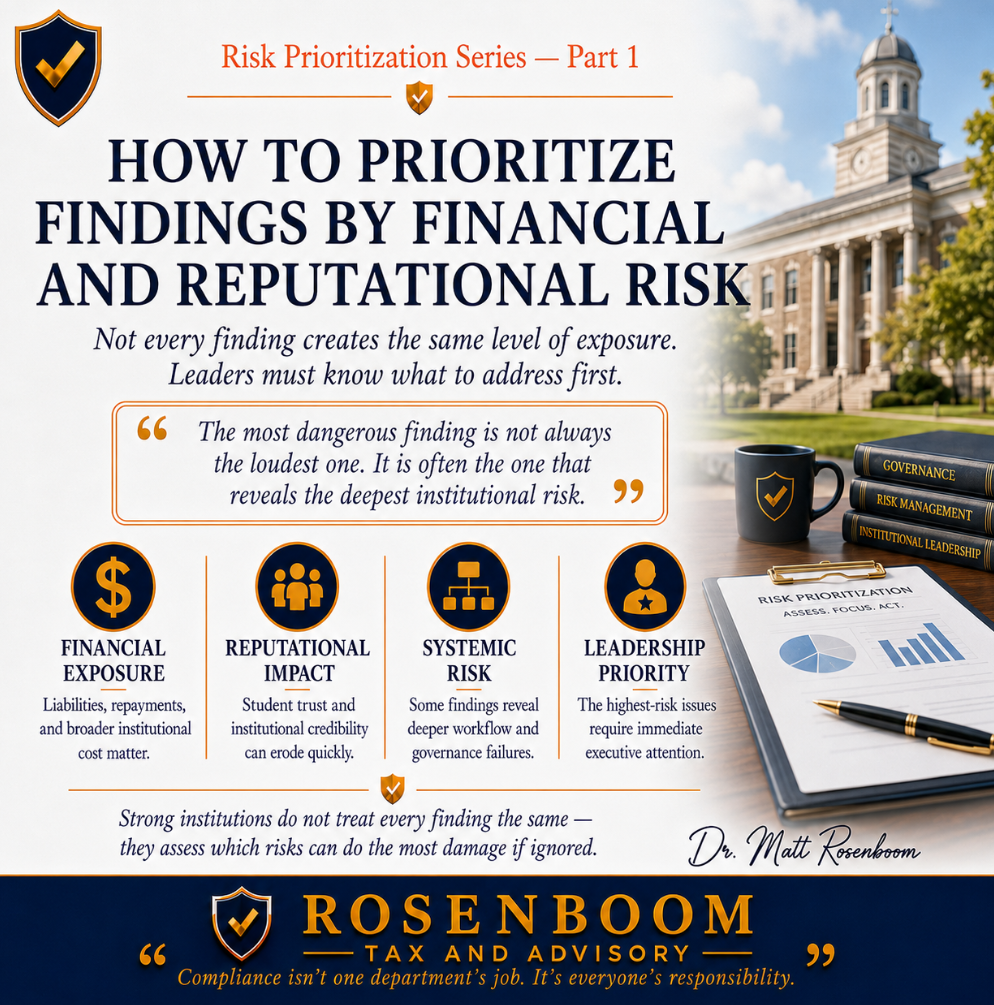
How to Prioritize Findings by Financial and Reputational Risk — Why Every Finding Is Not the Same Risk
Not every compliance finding carries the same level of institutional risk. Part 1 of this series examines why Title IV findings must be prioritized by financial exposure, reputational risk, student impact, documentation strength, and whether the issue reveals a deeper system weakness.
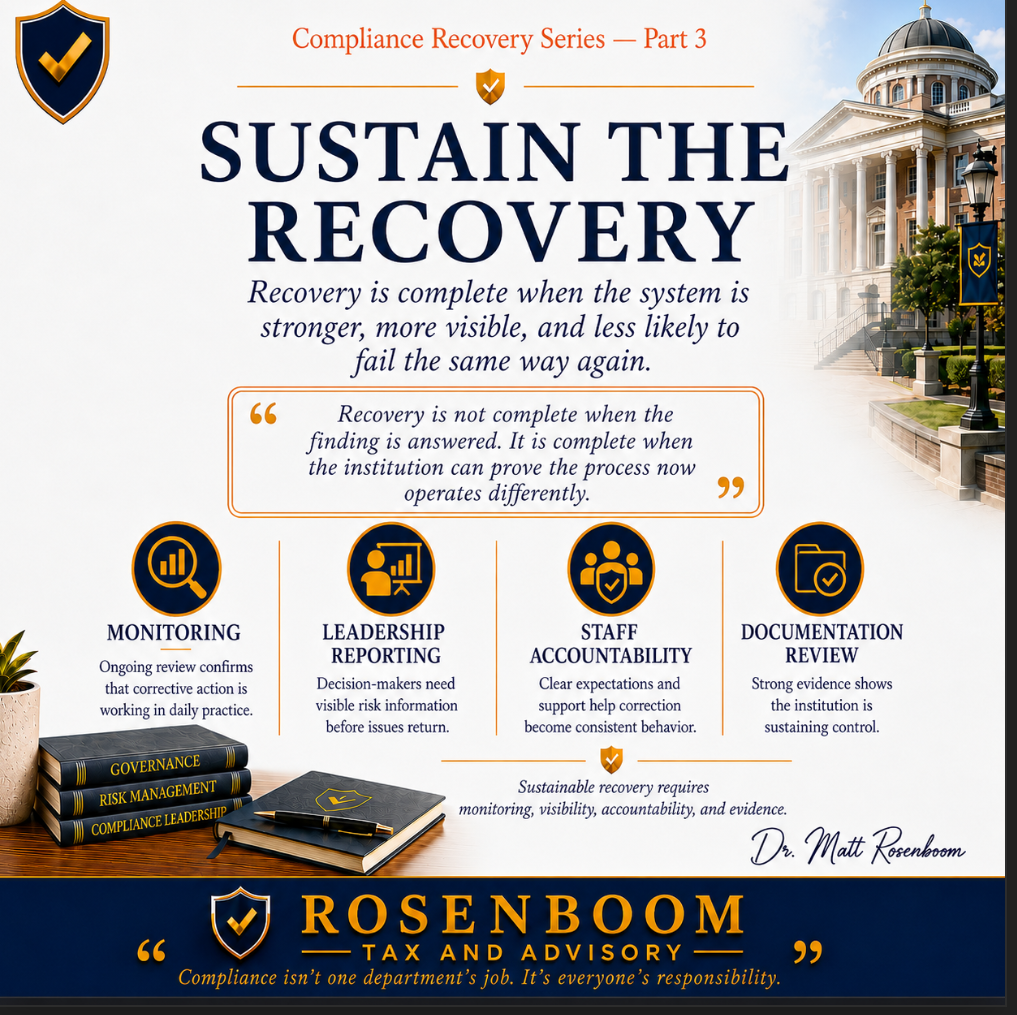
The 90-Day Compliance Recovery Roadmap — Sustaining Recovery After the Corrective Action Is Complete
Compliance recovery is not complete when the response is submitted. In the final part of the 90-Day Compliance Recovery Roadmap series, Dr. Matt Rosenboom explains why institutions must move from corrective action to long-term governance by strengthening monitoring, leadership reporting, staff accountability, documentation review, and ongoing compliance visibility.
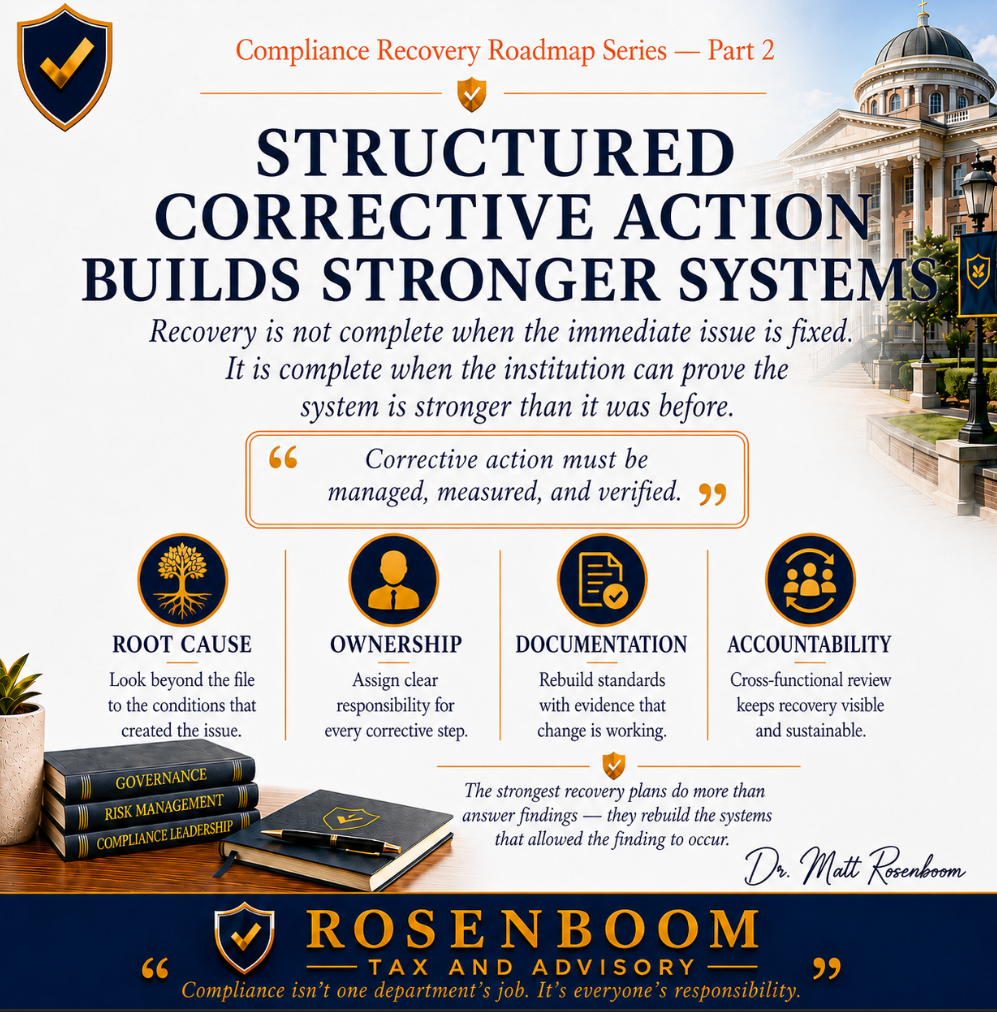
The 90-Day Compliance Recovery Roadmap — Moving From Stabilization to Structured Corrective Action
Compliance recovery is not complete when the immediate issue is fixed. In Part 2 of the 90-Day Compliance Recovery Roadmap, Dr. Matt Rosenboom explains why institutions must move from stabilization to structured corrective action by identifying root causes, assigning ownership, rebuilding documentation standards, and proving the system is stronger than it was before.
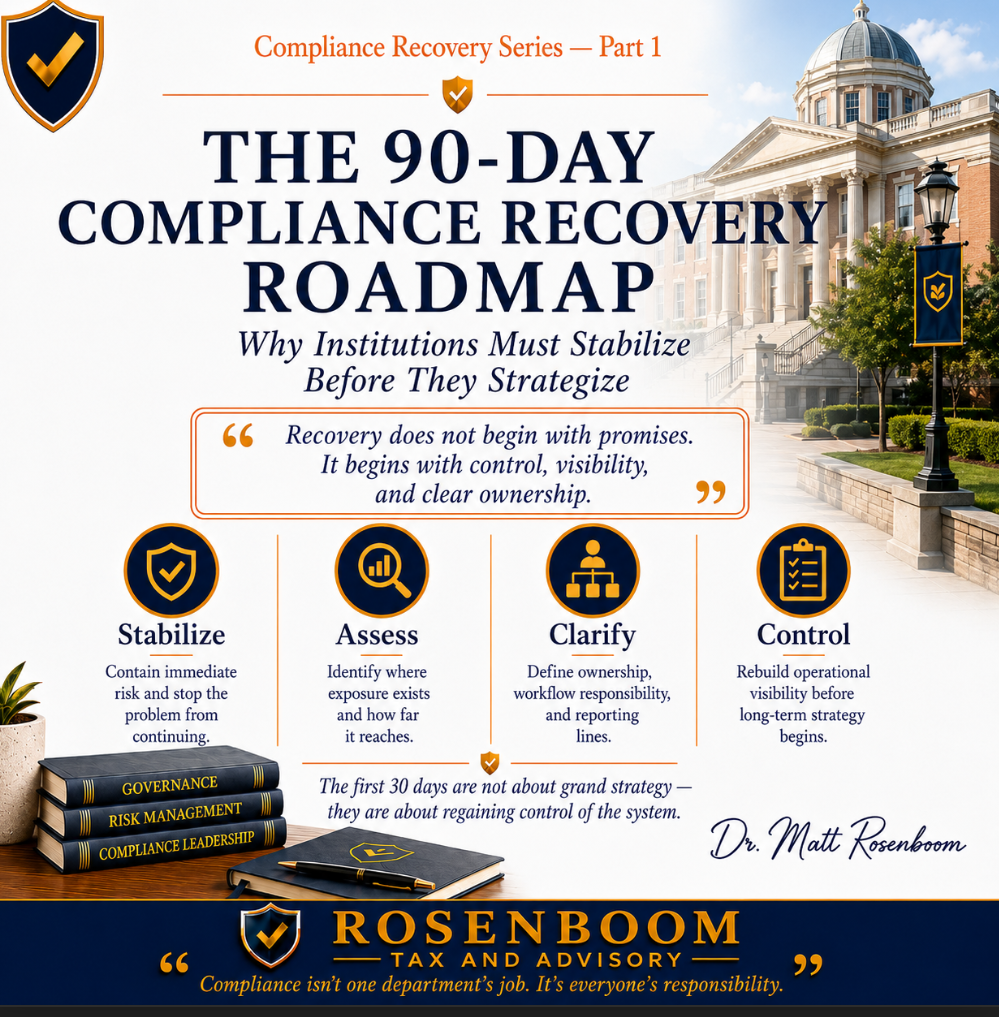
The 90-Day Compliance Recovery Roadmap — Why Institutions Must Stabilize Before They Strategize
Compliance recovery does not begin with broad strategy. It begins with stabilization, visibility, ownership, and control. In Part 1 of this three-part series, Dr. Matt Rosenboom explains why the first 30 days of a 90-day compliance recovery roadmap are critical for institutions facing Title IV risk, audit concerns, workforce strain, or operational instability.

Federal Confidence Begins with Governance Systems Why Institutions Cannot Rely on Good Intentions Alone: When Governance Breaks Down Before the Finding Appears
Federal confidence is not built on good intentions alone. It is built through governance systems that create ownership, documentation, accountability, staff support, and cross-functional visibility before risk becomes visible in a finding.

Federal Confidence Begins with Governance Systems Why Institutions Cannot Rely on Good Intentions Alone: When Governance Breaks Down Before the Finding Appears
Federal confidence does not begin with a clean file. It begins with the governance systems that determine whether ownership is clear, exceptions are documented, departments are aligned, and compliance is treated as an institutional control rather than a departmental responsibility. When those systems weaken, findings often become visible only after the real risk has existed for months or years.
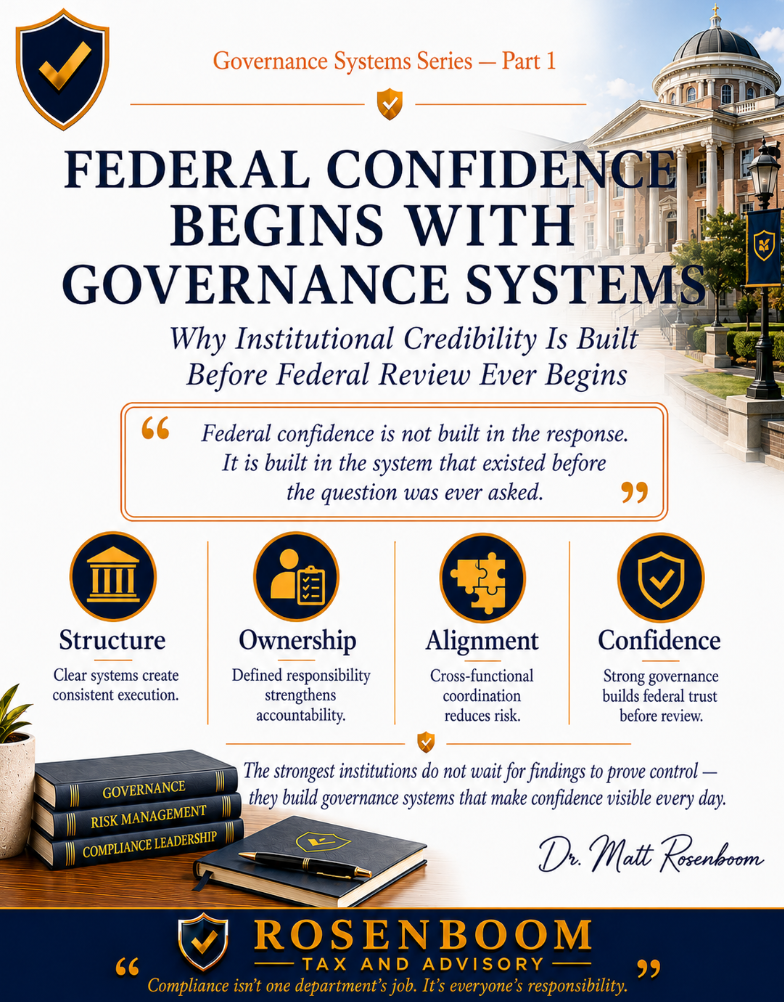
Federal Confidence Begins with Governance Systems Why Institutions Cannot Rely on Good Intentions Alone
Federal confidence is not built by policies alone. It is built through governance systems that show leadership, oversight, documentation, accountability, and cross-functional alignment are working before federal scrutiny arrives.
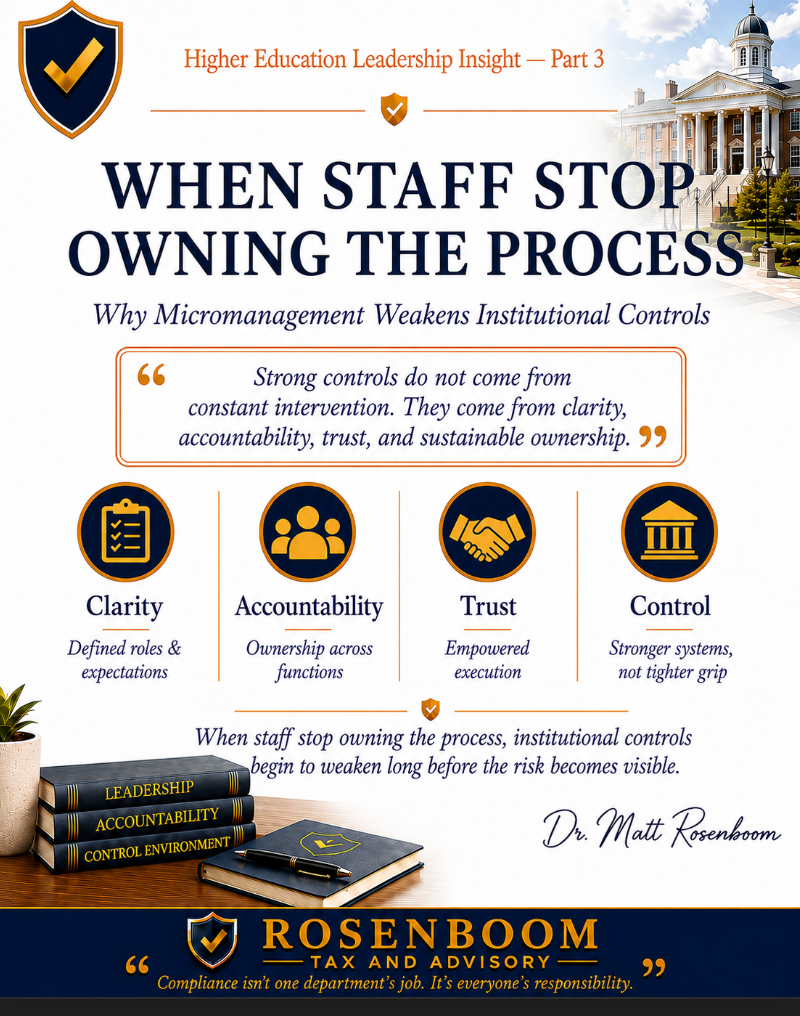
Why Micromanagement Weakens Institutional Controls: When Oversight Becomes Operational Risk: Stronger Controls Require Clarity, and Trust
Micromanagement may feel like control, but over time it weakens ownership, reduces engagement, and teaches staff to wait for direction instead of protecting the process. Stronger institutional controls come from clarity, accountability, trust, and systems that allow people to own their work.
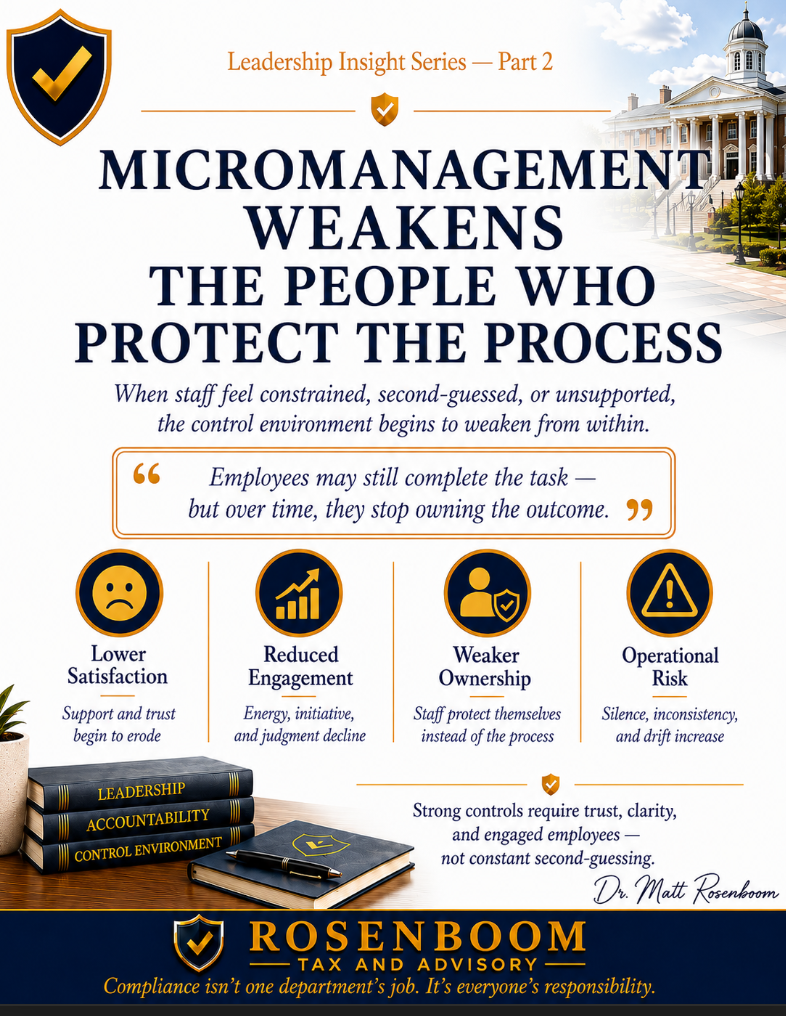
Why Micromanagement Weakens Institutional Controls: When Staff Stop Owning the Process
Micromanagement may appear to strengthen control, but over time it can weaken staff satisfaction, reduce work engagement, and create the very operational behaviors leaders are trying to prevent. In higher education, especially in Title IV environments, employees who feel constrained, second-guessed, or unsupported may begin to disengage from the processes institutions depend on for compliance, service, and stability.
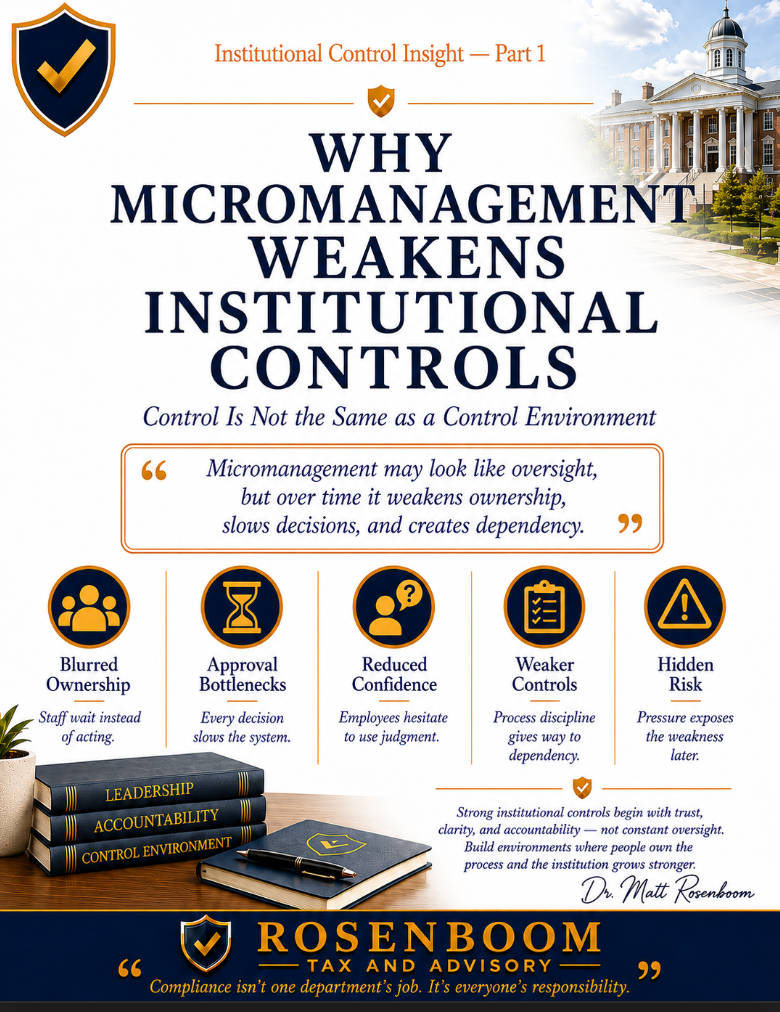
Why Micromanagement Weakens Institutional Controls Control Is Not the Same as a Control Environment
Micromanagement often appears to strengthen oversight, but in higher education operations it can weaken institutional controls by creating dependency, slowing decision-making, reducing ownership, and masking deeper workforce and compliance risks.
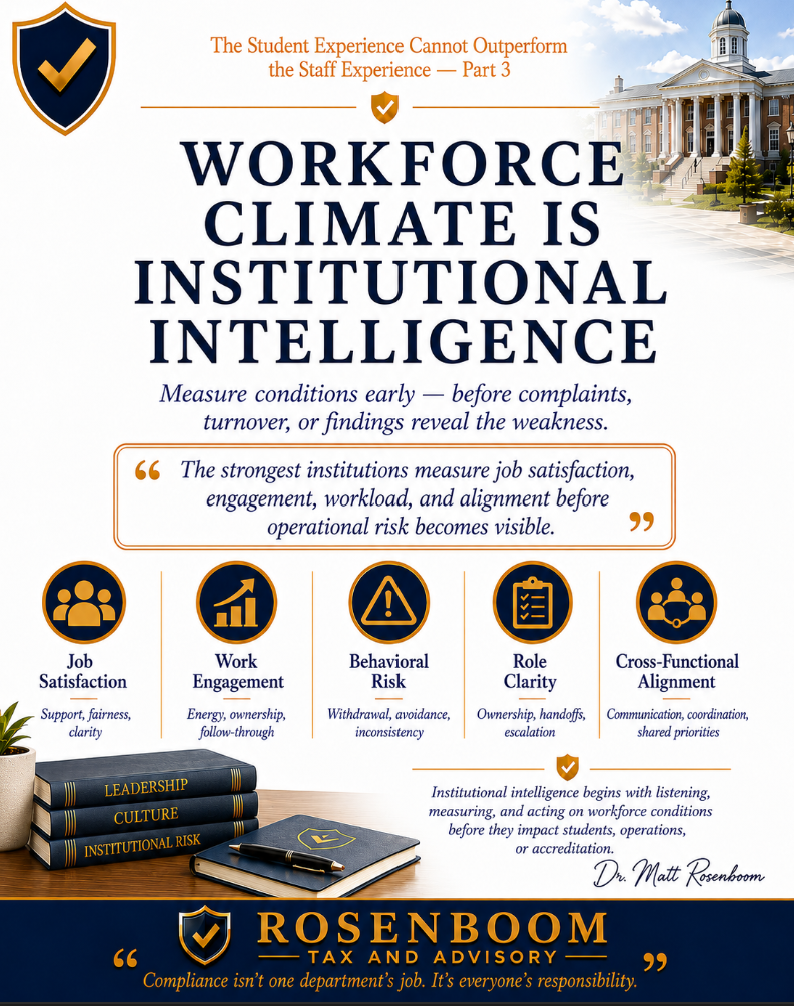
When Student-Centered Initiatives Fail, Workforce Climate Is Often the Missing Variable The Student Experience Cannot Outperform the Staff Experience
Student-centered initiatives often fail when institutions overlook the workforce conditions responsible for delivering them. Measuring job satisfaction, work engagement, behavioral risk, role clarity, workload pressure, and cross-functional alignment gives leaders early intelligence before student complaints, turnover, compliance findings, or operational instability make the risk visible.